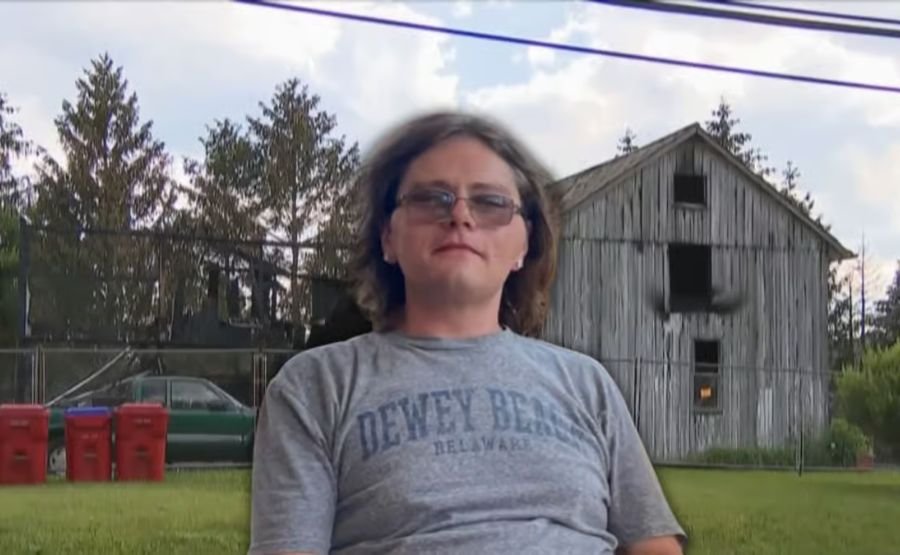
Justin Sholly: The Insider Who Lit the Fires He Fought
Here’s what most coverage of Justin Sholly got quietly wrong right out of the gate: this isn’t a story about a firefighter who snapped. It’s a story about a man who planned, who packed his car, and who drove back to the firehouse to put on his gear so he could respond to the scenes he had created. That’s not a snap. That’s a ritual. And the media, almost uniformly, treated it as a quirky crime-blotter oddity rather than asking what kind of person this actually describes.
Let’s be honest about what we know and what nobody bothered to dig into.
Quick Bio
| Detail | Info |
| Full name | Justin Tyler Sholly |
| Age at arrest | 29 (Inquirer initially and erroneously printed “19”) |
| Residence | Penn Avenue, Souderton, Pennsylvania |
| Fire company | Perseverance Volunteer Fire Company, Souderton (est. 1901) |
| Fires set | Three, between May 29–30, 2026 |
| Key fire | Detached garage near 102 W. Chestnut St. — his former boss’s property |
| Motive stated | Revenge against employer who fired him in 2025 |
| How caught | Automatic license plate readers, surveillance at firehouse |
| What police found in his car | Fire starter logs, lighter fluid, lighters, wood logs |
| Charges | 26 crimes including arson, creating disaster, holding flammable substances |
| Bail | $500,000 |
| Fire company’s response | Suspended, then terminated within 48 hours |
| Attorney | Vincent Erik Petersen (declined comment) |
The Coverage Problem
Look. When this story broke in early June 2026, you got two flavors of reporting. One was the wire-service churn: a headline, a mug shot from the Montgomery County DA’s office, a paragraph about the fires, and a line about bail. Done. The other was the “wild arson rampage” framing — the Daily Beast’s headline is right there — which turned a disturbing local crime into something almost entertaining. Neither version did anything useful with the actual facts.
The Philadelphia Inquirer — the regional paper of record, the place you’d expect local depth — initially reported Sholly’s age as nineteen. He’s twenty-nine. That’s a ten-year error, and it matters, because a nineteen-year-old firefighter setting fires carries a completely different cultural valence than a twenty-nine-year-old who has spent years in a volunteer company and still hasn’t found a way to process losing a job. The Inquirer corrected the story, quietly. Not many outlets picked up on the discrepancy. I’m not going to pretend that’s a scandal, but it tells you how closely anyone was actually reading the documents.
Who Was Justin Sholly, Really
Here’s the thing nobody really sat with.For many years, Sholly has been a part of the Perseverance Volunteer Fire Company. Not months. Years. The company has served Souderton and its surrounding towns since 1901, and it’s the kind of tight-knit organization where people know each other, train together, show up at three in the morning for barn fires in February. His neighbor Nick Clemmer, who lived near one of the burned structures and called 911, told ABC7 that he “certainly never thought he was capable of doing something like that.”
You, of course, never do.
That word — “capable” — keeps showing up in these cases. What Clemmer really means is that Sholly presented as a normal community member, a volunteer, someone embedded in the local fabric. That’s important because it complicates the easy story. The easy story is: disturbed loner sets fires, gets caught. The actual story is more corrosive: community member, trusted with knowledge of dispatch systems and fire response times, exploits that trust from the inside. That’s a different category of betrayal.
Sholly lost his job in 2025. He sat on that for the better part of a year. Then, in the span of thirty hours across May 29 and 30, he set three fires. He used fire starter logs and a lighter — items he allegedly already had in his car when police searched it, along with lighter fluid and additional wood logs. You don’t accidentally assemble a mobile arson kit. You pack it. You think about it. The criminal complaint makes clear he knew people were asleep in some of the occupied structures nearby when he lit the garage on Chestnut Street.
And then — and this is the part that every headline grabbed but few examined — he drove back to the firehouse and responded to the scenes.
The Double Life Nobody Unpacked
Take a moment to reflect on that. Not the spectacle of it. The logistics.
After setting a fire at approximately 4:17 a.m. near his former boss’s property, Sholly drove to the Perseverance Volunteer Fire Company parking lot. Surveillance footage shows his car there at roughly 4:25 a.m. — minutes before the company got the call. Then he presumably geared up, climbed on the truck, and went back. His colleagues, who trusted him, who ran with him on calls, who had no idea, were right there beside him at a fire he made.
This is where the coverage kept reaching for the word “audacity” and stopping. It is audacious, sure. It is also something the fire engineering and criminology literature has spent decades trying to explain, and almost none of the mainstream reporting bothered to connect those dots.
Here’s what that literature actually says. The FBI’s behavioral analysis unit has documented what they call the “hero or vanity” arsonist — someone who sets fires in part to create an opportunity to display heroism or rescue behavior. A separate category is the revenge arsonist, who targets a specific person or place with personal significance. Sholly appears to straddle both. The Chestnut Street fire had a clear revenge motive: he told investigators directly that he targeted the garage because he believed his former employer lived there. But the other fires — burning logs at a roadside, a barn at County Line Nursery that destroyed vehicles and outbuildings — fit a different pattern. And the repeated act of responding to his own fires suggests something beyond pure revenge.
Let’s be honest: the media didn’t frame it that way because nuance doesn’t traffic well.
The Fire Company’s Problem
Perseverance Volunteer Fire Company suspended Sholly the day after his arrest and terminated him within 48 hours. Company president Daniel Biros issued a statement confirming cooperation with law enforcement and essentially distancing the institution from the individual as quickly as possible. Franconia Township Police Chief Michael Martin used his press conference to credit “great police work,” offer reassurance to the community, and note that Sholly’s actions “are not representative of the fire company as a whole.”
This is the correct institutional response. It is also exactly what every institution says.
What it doesn’t address is the question that should be asked every time a trusted insider commits a serious crime: what did the screening miss, and what did the ongoing culture fail to catch? The fire engineering and behavioral literature is pretty frank about this — it notes that volunteer fire departments, because of staffing pressures, often have minimal pre-screening and essentially no ongoing psychological monitoring. The National Volunteer Fire Council acknowledged in the early 1990s that it couldn’t even pin down reliable statistics on firefighter arsonists because the data didn’t exist. A 2010-era Fire Engineering report noted flatly that fire administration had “no hard data” on prevalence. Decades later, not much has changed.
Sholly had been there for years. Multiple colleagues. Regular calls. Shared dispatches. And apparently no indication — or at least none that anyone acted on — of the kind of grievance that would eventually lead him to bring his own lighter to a firehouse call.
The Age of Resentment
Here’s my sincere take, for whatever it may be worth.
Sholly lost his job in 2025. He sat on it. A year — roughly — of nursing that specific injury, that exact person, that particular address on Chestnut Street. The fact that he knew where his former boss lived, knew the layout well enough to target a detached garage rather than the house itself, suggests a prolonged and detailed fixation. He may not have been building an explicit plan the whole time, but the knowledge was there, gathering.
And then he acted — not just once, not impulsively, but across three fires, thirty hours, and one very deliberate return to the firehouse. The third fire, at County Line Nursery, destroyed a barn along with three vehicles, a shed, and a gazebo. That’s not the target. That’s overflow. That’s a person whose containment has cracked.
You can feel however you want to feel about that. I don’t have any sympathy for endangering ten sleeping people so you can punish your old boss. I also think the media’s hunger for the “wild rampage” framing missed something quieter and more frightening: a man who held a job in public safety, felt publicly humiliated by losing a different job, and found a way to use his access to make others afraid.
The Irony Everyone Said Out Loud
Twenty-six charges. Just that figure should indicate something to you. Arson, reckless burning, causing catastrophe, possessing incendiary materials, criminal mischief, criminal trespass, recklessly endangering another person — the list goes on. A $500,000 bail that, as of the time of reporting, he hadn’t made. A preliminary hearing before District Judge Adam Katzman on June 10.
His lawyer declined to comment. Of course he did.
The fire company said his actions “stand in complete opposition to the core values, mission, and dedication of our company.” Yes, they do. That’s not wrong. It’s also a sentence that gets issued and then everything moves on, the community takes its “collective sigh of relief” — the police chief’s phrasing — and the structural question gets buried again under the next news cycle.
What the Coverage Owed You
Look, I’m not pretending there was some massive hidden story here that took years to uncover. The basic facts got reported. He set fires, he got caught, he’s charged. Fine.
What coverage owed was context. The firefighter-arsonist phenomenon is documented, studied, and repeatedly under-screened for. The profile Sholly fits — revenge motive converging with insider access and possible vanity behavior — is not exotic. It has a literature. That literature was available to every reporter who filed three paragraphs and a mug shot. None of them went there.
What coverage also owed was correction — quickly and prominently. The age error isn’t trivial. A nineteen-year-old with a grudge fits a completely different narrative than a twenty-nine-year-old who spent years inside a volunteer company, absorbing its rhythms, and then used that knowledge to stage what amounted to a performance of both revenge and rescue.
The community knew Justin Sholly. They thought they did, anyway. That’s the part that lingers. Not the fires themselves, which were put out. But the man who helped put them out.
Judgment
Here it is, plain: Justin Sholly is someone who made a deliberate series of choices to endanger people in his own community in order to satisfy a personal grievance, and then compounded it by using his trusted position to insert himself into the aftermath. That’s not a breakdown. That’s a plan. The charges are serious, the evidence per the affidavit is damning, and the confession makes the legal picture straightforward. Whether he gets the help he clearly needs alongside whatever sentence comes is a question for courts and clinicians, not for my essay.
What I’ll say is this: the story of Justin Sholly is not about one bad apple in a good barrel. It’s about the barrel itself — about how volunteer emergency services absorb and trust people without any real mechanism for detecting the slow burn of something going wrong inside them. The fact that it happens repeatedly, in Schuylkill County, in Cape Breton, in Montgomery County, and the fire service still has no hard data and no systematic answer — that’s the story. Sholly’s just the latest name attached to it.
See also “John Cambridge: The Quiet Force Behind the Success“
FAQs
1. What exactly did Justin Sholly do?
He set three fires in Franconia Township and Souderton, Pennsylvania, over roughly thirty hours in late May 2026, then drove to his volunteer fire company and responded to two of those scenes as a firefighter. He admitted to all three to investigators.
2. How old was he when arrested?
Twenty-nine. The Philadelphia Inquirer initially reported nineteen — a ten-year error — and issued a correction. Every other major source confirmed twenty-nine from court records.
3. What was his motive?
Revenge against a former employer who fired him in 2025. He specifically targeted a detached garage near his ex-boss’s home on Chestnut Street in Souderton. The other fires appear to blend revenge overflow with possible thrill or vanity behavior — he kept responding to his own blazes.
4. How did police catch him so fast?
Automatic license plate readers logged his Ford Edge near each fire scene shortly before ignition. Surveillance footage also placed his car at the Perseverance fire station parking lot minutes before a dispatch. He was identified as the registered owner, interviewed, and confessed.
5. What was in his car when searched?
Fire starter logs, wood logs, lighter fluid, lighters, and what the affidavit describes as a box containing fire-starting materials. He had a mobile arson kit.
6. What happened to his fire company membership?
Suspended immediately upon arrest, terminated two days later by company president Daniel Biros. The company issued a statement saying his actions contradicted their values and cooperated fully with the investigation.
7. How many charges is he facing?
Twenty-six, including arson, causing catastrophe, possessing incendiary materials, reckless burning, criminal mischief, criminal trespass, and recklessly endangering another person. No injuries were reported.
8. Is this a common phenomenon — firefighters committing arson?
More common than people want to admit. It’s documented in the fire engineering and criminology literature going back decades. Volunteer fire departments face particular vulnerability because of low screening and no psychological monitoring. There’s still no reliable national prevalence data.
9. Were people at risk during the fires?
Yes. The Chestnut Street garage fire was set feet from homes with ten people asleep inside, per the criminal complaint. The County Line Nursery barn fire — which destroyed the barn, three vehicles, a shed, and a gazebo — was also near occupied structures.
10. What does Sholly’s attorney say?
Nothing publicly. Vincent Erik Petersen declined all comment.
11. What happens next legally?
As of June 2026, a preliminary hearing was scheduled before Magisterial District Judge Adam Katzman on June 10, 2026. Sholly remained in Montgomery County Prison on $500,000 bail. No trial date has been publicly set at the time of this writing.
Find fresh stories beyond the spotlight with Celebs Flare.




One Comment