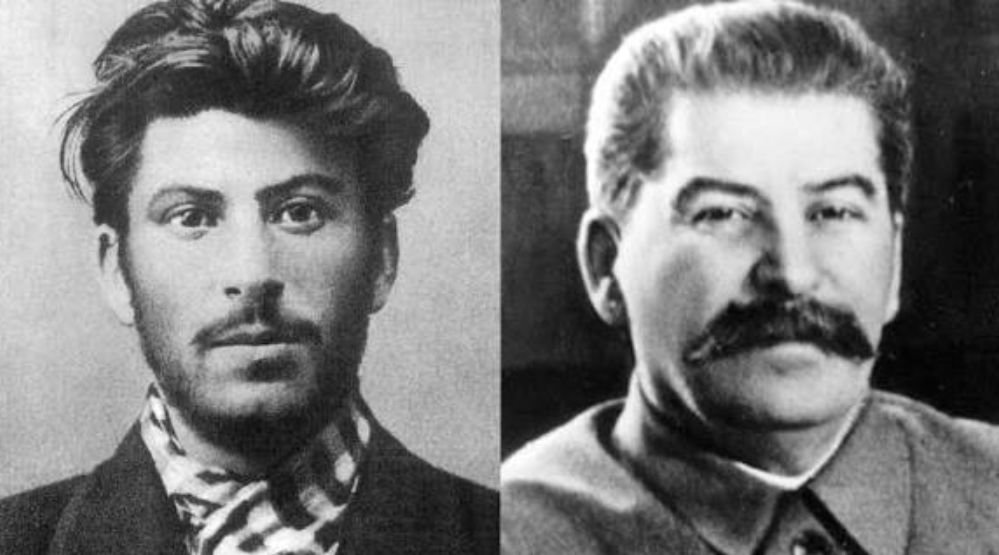
Joseph Stalin: The Life, Rise to Power, and Dark Legacy of the Soviet Leader
Here is the thing that serious historians keep circling around without saying plainly enough: the popular understanding of Joseph Stalin — the mustached monster of Cold War cartoons, the blunt instrument of evil standing opposite Hitler in the century’s moral theater — has made him easier to dismiss and harder to actually understand. And understanding him matters, not to forgive him, not to find the hidden good in a man responsible for somewhere between six and twenty million deaths depending on whose methodology you trust, but because the cartoonish version lets everyone off the hook. If Stalin was simply a monster, then monstrousness is an aberration. The documented record suggests something considerably worse: that he was a system, a logic, an institutional production, and that the system largely worked by the standards it set for itself until it killed so many people the internal contradictions became impossible to manage.
That’s the story most coverage avoids, because it’s harder to live with than the monster.
Quick Bio
| Detail | Info |
| Born | December 18, 1878 (official: December 21, 1879), Gori, Georgia, Russian Empire |
| Real name | Iosif Vissarionovich Dzhugashvili |
| Rule | General Secretary, Communist Party USSR, 1922–1953; de facto dictator by late 1920s |
| Death toll range | Scholarly estimates: 6–8 million (Snyder, conservative); 12–20 million+ (Conquest, broader methodology); not including WWII military losses |
| Gulag deaths | Archival records: approximately 1.5–1.7 million direct Gulag deaths, 1930–1953; Conquest estimated higher due to incomplete records |
| Holodomor | 3.5–5 million Ukrainian deaths (1932–33); genocide designation contested among historians; Applebaum argues intentional |
| Great Terror | ~750,000 executed, 1936–1938; millions more imprisoned or exiled |
| Family | Mother Keke Geladze; father Beso Dzhugashvili (likely not biological); two wives; son Yakov (POW, died 1943); son Vasily; daughter Svetlana |
| Death | March 5, 1953; cerebral hemorrhage; possibly delayed treatment |
| Contemporary popularity | 2021 Levada poll: 56% of Russians viewed him positively |
The Birth Year He Falsified
Start here because it tells you something. Stalin changed his own birth year. He was born in 1878 and officially recorded it as 1879. The reason is trivially bureaucratic — he wanted to appear younger for certain party records — but the habit of revising the record to suit the present need became, in a very real sense, the operating principle of his entire rule. The archives got adjusted. The photographs got retouched. The history got rewritten. The birth year forgery is a minor thing that contains the major thing: his relationship to documented truth was purely instrumental from very early on.
He was Iosif Dzhugashvili, the son of a cobbler named Beso and a fiercely devoted mother named Keke Geladze, from Gori in Georgia. The cobbler was possibly not his biological father — some biographers note the physical discrepancy and point to various candidates including a local police officer or landowner — but this is speculative. What isn’t speculative is that his childhood involved real violence, real poverty, and a mother who pushed him toward the Orthodox seminary in Tiflis with a determination that bordered on religious. He excelled there. He read voraciously. He became a radical. He was expelled, eventually, for revolutionary activity, though the seminary left marks — a tendency toward catechism, toward absolute moral frameworks, toward the idea that there is one correct doctrine and heresy must be rooted out.
See also “The Woman Who Told the Truth Twice and Got Remembered for the First Version: On Adeline Watkins“
The Georgian Who Became the Great Russian
Look at what the coverage usually skips: Stalin was not Russian. He was Georgian, from a culture the Russian Empire treated as peripheral, and he spoke Russian with a noticeable Georgian accent his entire life. The Soviet state he ran was formally international and proletarian but practically Russian nationalist in its priorities — and he ran it while being from the group that nationalism most visibly subordinated. There’s a psychological thread worth pulling here, though Stephen Kotkin, the most rigorous of his modern biographers, is notably impatient with psychological explanations. Kotkin’s argument is structural: Stalin embodied Bolshevism, not the reverse. The paranoia, the purges, the enemies everywhere — these emerged from an ideological system that required enemies to function, not from a damaged individual psychology.
But I think Kotkin’s impatience overcorrects. The man who authorized the arrest of the wives of his closest associates — Molotov’s wife was imprisoned, Kalinin’s wife was imprisoned, and neither man dared object — was doing something that went beyond bureaucratic logic. He imprisoned the loved ones of his subordinates as insurance. As hostages. He watched to see whether loyalty held under that pressure. That’s not institutional paranoia; that’s a specific and personally creative form of cruelty that an institution produced but an individual refined.
The Deaths and the Numbers Game
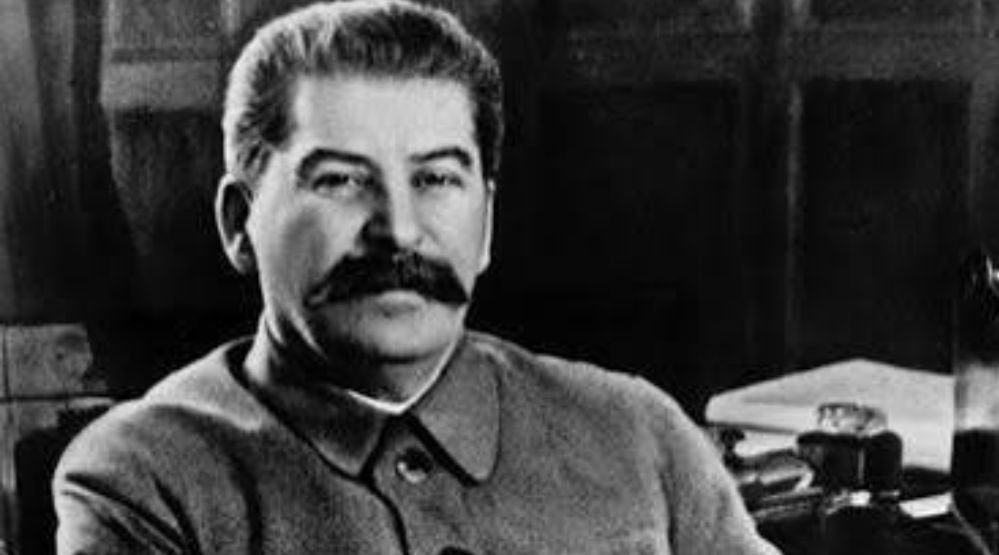
Let’s be honest about the numbers, because this is where the coverage fails in two opposite directions simultaneously. The Cold War tradition produced estimates of sixty million deaths under Stalin, numbers that have been significantly revised downward by post-Soviet archival access. Robert Conquest, whose work was instrumental in establishing Western understanding of the Terror, estimated roughly twenty million. Timothy Snyder, working from the post-Soviet archives, argues the directly attributable death toll is closer to six to eight million. The difference isn’t political disagreement — it’s methodology. How you count famine deaths (some attributable to policy, some to policy plus natural conditions), whether you include wartime deaths from Stalinist military decisions, how you handle the known problem of incomplete Soviet record-keeping: these choices produce radically different totals.
The archival death toll for the Gulag specifically — direct deaths in labor camps — is approximately 1.5 to 1.7 million for the entire Stalinist period. Conquest estimated higher, on the reasonable grounds that the Soviets had incentive to undercount, that prisoners were often released while dying to depress the official numbers, and that the administrative records were themselves part of the propaganda apparatus. Both positions are defensible from the available evidence. What isn’t defensible is treating either number as a propaganda tool rather than a genuine historiographical problem.
The Holodomor — the Ukrainian famine of 1932–33 — killed somewhere between 3.5 and 5 million people. Snyder estimates 3.3 million for Ukraine specifically. The question of whether this constitutes genocide turns on intent: did Stalin deliberately use the famine to destroy Ukrainian national identity and political organization, or did a catastrophically mismanaged collectivization produce mass death as a byproduct? Anne Applebaum’s careful reading of the evidence argues the former. Sheila Fitzpatrick, reading the same evidence differently, argued for the latter — and provoked Applebaum into one of the sharper public historiographical disputes in recent memory. Both scholars are serious. The disagreement is real.
The Great Terror and Its Specific Logic
The Great Terror of 1936–1938 tends to get covered as irrational, as the product of a paranoid leader inventing enemies. The archival evidence suggests something more chilling: it was largely rational by its own stated ends, administratively organized, and produced by a system in which local officials competed to exceed quotas of arrests and executions the way factory managers competed to exceed production quotas.
Stalin set the framework. The NKVD gave regional offices numerical targets — arrest this many, execute this fraction — and regional officials, terrified of appearing insufficiently vigilant, hit and then exceeded their numbers. People were arrested because their names appeared in the address books of people who had already been arrested. Entire professions were suspect: engineers (labeled “bourgeois specialists”), priests, former Mensheviks, foreign-trained scientists. The logic of the “potential enemy” — it was enough to belong to a suspect category to be arrested — made the number of potential victims nearly unlimited.
Approximately 750,000 people were executed in those two years. Millions more were imprisoned. And then Stalin stopped it, not because it had run its course but because it was consuming the institutional infrastructure of the state. Military officers had been purged so thoroughly — including most of the senior command — that the Red Army’s performance in Finland in 1939–40 was genuinely catastrophic. You can draw a straight line from the 1937 purge of the Soviet military leadership to the disasters of June 1941 when Germany invaded, when entire armies were encircled and destroyed partly because capable officers had been shot and replaced with men who were ideologically reliable but militarily inexperienced.
The War, Which Complicates Everything
And then there’s the war, which is the thing that makes Stalin permanently complicated in a way that Hitler is not, and which explains the 56% positive rating in that 2021 Levada poll. Stalin’s Soviet Union absorbed approximately twenty-seven million deaths in World War II. It absorbed the full weight of the Wehrmacht for three years while Britain and America built up strength in the west. It was the main engine of Nazi military destruction. Without Soviet resistance, without Soviet sacrifice — much of it compelled at gunpoint by the NKVD blocking units positioned behind retreating Red Army soldiers — the war in Europe would not have ended when or how it did.
The popular Western coverage tends to handle this by separating the war Stalin from the purge Stalin, as if they were different people. Russian popular memory does something nearly opposite: it emphasizes the victory so absolutely that the purges get absorbed into the narrative of the man who saved the motherland. Neither framing is satisfying. What’s true is that both things happened in the same historical moment, administered by the same man, using much of the same apparatus. The NKVD that ran the Gulag also ran the blocking units that shot retreating soldiers. The terror that destroyed the military’s competent leadership in 1937 also produced the catastrophe of 1941. The man who authorized Operation Bagration in 1944 — one of the most militarily competent operations of the entire war — was the same man who had shot most of his best generals seven years earlier.
The Family He Destroyed Along with Everything Else
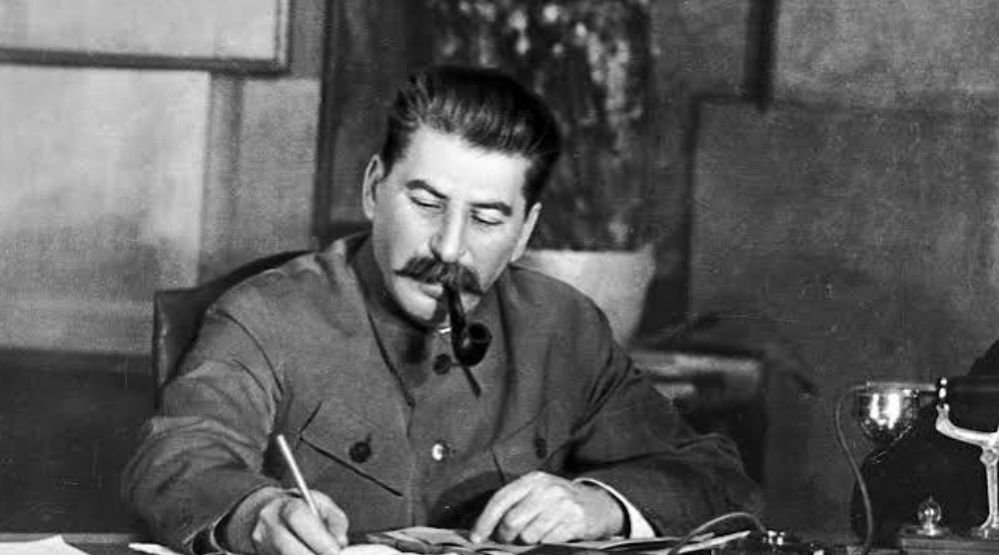
Sebag Montefiore’s biography, Court of the Red Tsar, does what Kotkin explicitly avoids: it goes inside the personal life. And what it finds is specifically ugly in a domestic register. Stalin’s first wife, Kato Svanidze, died young of typhus or tuberculosis in 1907, and he was genuinely devastated. His second wife, Nadezhda Alliluyeva, shot herself in November 1932, reportedly after a public argument in which Stalin humiliated her in front of the Politburo leadership at a dinner. His response to her death was to declare she had betrayed him. He made her suicide about himself.
His son Yakov was captured by the Germans in 1941. The Germans offered to exchange him. Stalin refused, reportedly saying he would not trade a marshal for a lieutenant. Yakov died at Sachsenhausen concentration camp in 1943, apparently throwing himself against an electrified fence. His daughter Svetlana eventually defected to the West, writing memoirs that portrayed her father with the specific revulsion of someone who loved him and watched what he was. His son Vasily became an alcoholic military officer who traded on his father’s name and drank himself to death after Stalin died and no longer protected him from consequences.
The Death He Might Not Have Had to Die
Stalin’s death on March 5, 1953, has never been fully explained to everyone’s satisfaction. He suffered a cerebral hemorrhage at his dacha at Kuntsevo. His guards, terrified to enter his rooms without being summoned, found him on the floor the next morning. His inner circle — Beria, Malenkov, Khrushchev, Bulganin — were called and arrived. Medical help was delayed, apparently for hours, in circumstances that have led some historians to suggest a conspiracy, though the evidence for deliberate murder is circumstantial. Beria is the most frequently named plotter; he reportedly boasted of poisoning Stalin at a later date, though boasting was also his style.
The irony is almost too neat: the man who had imprisoned the family members of his closest subordinates as insurance against betrayal died in a room no one dared to enter, tended by subordinates who had every reason not to call the doctor quickly. The institutional terror ran both ways. In the end it may have run against him.
My Honest Assessment
Here is where I land after years of reading about this man. The monster framing is intellectually lazy. The system framing is intellectually honest but risks sliding into the equally useless position that Stalin was merely the instrument of historical forces. The truth sits between those positions and is harder to articulate: he was a person of genuine intellectual ability who made choices — sustained, deliberate, daily choices — to build and maintain a system of mass terror, and he made those choices within a political tradition that made them available and even logical, and he refined that system with personal creativity that went beyond what the tradition required.
He read more broadly than nearly all of his peers acknowledge. He annotated books. He had genuine aesthetic preferences in film and literature. He rewrote the history textbooks himself. He kept the most extensive personal archive of any Soviet leader. And he used all of that intelligence, all of that energy, to administer mass death with a bureaucratic thoroughness that made the scale possible.
The numbers argument — the question of whether it was six million or twenty million — matters enormously for specific historical and legal purposes like genocide determinations. For the question of moral assessment, it is secondary. What the archives confirm, regardless of the final count, is that the death was systematic, intentional in its broad direction, and administered by a man who knew exactly what the documents he was signing meant. That’s the story. Most coverage either inflates the numbers for rhetorical effect or deflates them in misguided revisionism, and in both cases it misses what the record actually shows: deliberate, knowing, sustained mass killing in the service of an ideological project that its architect never stopped believing in.
FAQs
1. How many people did Stalin kill?
The honest answer is: it depends on methodology. Post-Soviet archival research puts direct Gulag deaths at roughly 1.5–1.7 million. Famine deaths attributable to collectivization policy add 5–7 million more. Great Terror executions add approximately 750,000. Timothy Snyder estimates 6–8 million total directly attributable deaths excluding the war period. Robert Conquest’s earlier estimates of 20 million used broader methodology. The number “60 million” cited sometimes is not supported by serious scholarship.
2. Was Stalin worse than Hitler?
This question generates more heat than light. Hitler’s Holocaust was explicitly racial extermination of a defined group. Stalin’s killing was more varied in target — class enemies, national groups, imagined spies, random victims of quota-fulfillment. Hitler killed more Jews per unit time in a more mechanically systematic way. Stalin killed more people overall in aggregate across a longer period. Comparing them morally is less useful than understanding each system on its own terms.
3. What caused the Holodomor?
Stalinist collectivization policy imposed grain quotas on Ukraine that extracted food from a population already facing shortfall. The debate is whether the resulting famine was deliberately weaponized against Ukrainian national identity (Applebaum’s position, widely accepted) or was a catastrophic policy failure without specific genocidal intent (Fitzpatrick’s earlier position). The Ukrainian parliament and many governments recognize it as genocide. Most Western historians consider it a deliberate use of famine as a political weapon, though “genocide” requires proving intent to destroy a group as such.
4. Was Stalin Georgian or Russian?
Georgian, born in Gori. He spoke Russian with a Georgian accent his entire life. The irony of a Georgian running a state that suppressed Georgian nationalism and absorbed Georgia into the Soviet Union as a subordinate republic has been noted by historians and by Georgians ever since.
5. Did Stalin save Russia in World War II?
The Soviet Union under Stalin absorbed the main weight of Germany’s military capacity for most of the European war and was the primary engine of Germany’s military destruction. Stalin’s purge of the military in 1937 contributed directly to the disasters of 1941. His subsequent recovery of military competence — learning from catastrophe, promoting capable officers like Zhukov — produced the victories of 1943–45. Both of these statements are accurate and significant.
6. Why do Russians still view Stalin positively?
The 2021 Levada poll showing 56% positive sentiment reflects the way WWII victory has been consolidated as the central national memory of Soviet-era Russia. For many Russians, Stalin is the man who won the war, not the man who ran the Gulag. Post-Soviet Russian historical education has also retreated from the glasnost-era reckoning with Stalinist crimes.
7. Did Stalin believe in communism?
Yes, genuinely, though his communism was increasingly inflected with Russian great-power nationalism. Kotkin’s view is that Stalin was ideologically sincere in a way that later Soviet leaders often were not. He read Marx. He annotated Lenin. He understood himself as building socialism. This didn’t prevent him from practicing personal autocracy; he apparently saw no contradiction.
8. How did Stalin die?
Cerebral hemorrhage on March 1, 1953, found on the floor of his dacha the morning after. He died March 5. Medical treatment was delayed by several hours, possibly because his guards were afraid to enter his room unsummoned and his Politburo inner circle were in no hurry to save him. Whether this constitutes negligence, fear, or deliberate conspiracy remains debated by historians.
9. What happened to Stalin’s children?
Son Yakov was captured by Germany in 1941; Stalin refused to exchange him; he died at Sachsenhausen in 1943. Son Vasily became a Red Air Force general, alcoholic, died 1962. Daughter Svetlana defected to the United States in 1967, wrote memoirs critical of her father, died in 2011.
10. Was Stalin educated?
More than popular accounts suggest. He attended the Tiflis Orthodox seminary, read extensively throughout his life, kept a large personal library with his own annotations, and involved himself directly in Soviet cultural policy including film, literature, and history textbooks. He was intellectually engaged in a way that makes his choices more disturbing, not less.
11. Could Stalin have been removed?
Lenin’s “Testament” of 1922–23 recommended removing Stalin as General Secretary, citing his rudeness and concentration of power. The document was suppressed and Lenin died before he could act on it. Whether the Politburo could have removed Stalin after that is genuinely debated. Kotkin argues that Stalin’s position was more precarious than it appeared through the late 1920s and that his triumph required both his own considerable political skill and a degree of contingency that historiography sometimes papers over.
Find fresh stories beyond the spotlight with Celebs Flare.




One Comment