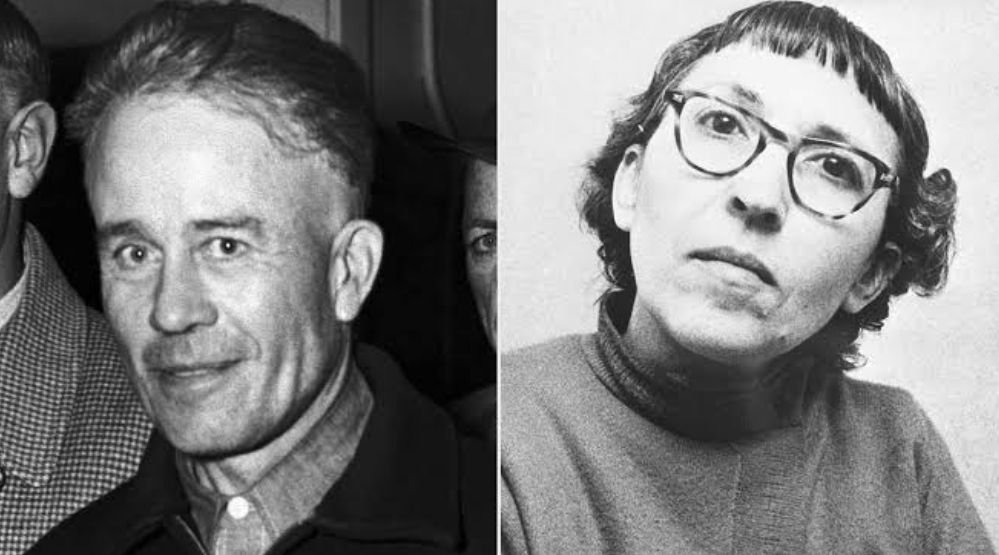
The Woman Who Told the Truth Twice and Got Remembered for the First Version: On Adeline Watkins
Every time a new Ed Gein documentary is published, which seems to happen every other year, Adeline Watkins corrected the record, which is what concerns me every time this topic comes up. That’s the part you keep having to go back to, because the coverage keeps forgetting it. She gave one interview in November 1957 that generated sensational headlines. She gave a second interview approximately two weeks later that walked back almost every provocative claim. And the coverage — then and now — treats the first interview as the real one and the second as a footnote. A woman told you she exaggerated. The press decided she was wrong about her own exaggeration and kept running the exaggerated version. That is a specific kind of journalistic failure, and the Netflix documentary Monster: The Ed Gein Story in 2025 pulled the whole machine back into motion for a new generation to experience it.
Let’s be honest: the story of Adeline Watkins is mostly a story about how the press treats women who refuse to stay in the roles assigned to them.
Quick Bio
| Detail | Info |
| Full name | Adeline Watkins |
| Age at time of interview | Approximately 50 years old (November 1957) |
| Residence | Plainfield, Wisconsin; small apartment with widowed mother |
| Relationship to Ed Gein | Neighbor and occasional acquaintance in Plainfield |
| First interview | Minneapolis Tribune, reprinted Wisconsin State Journal, November 21, 1957; headline: “Plainfield Woman Nearly Wedded Gein” |
| First interview claims | 20-year romance; proposal in February 1955; regular dates to movies and taverns |
| Second interview | Stevens Point Journal, December 3, 1957 |
| Retraction | Said she knew Gein for 20 years, not that they had a 20-year romance; denied her mother called him “sweet”; called original story “exaggerated” |
| What she confirmed | She knew Gein; he was quiet and polite; last saw him February 6, 1955 |
| Post-1957 public record | None — she spoke publicly about Gein only twice |
| Netflix 2025 | Monster: The Ed Gein Story renewed coverage interest |
| IMDB actress | A different Adeline Watkins, actress, credited in Saving Humanity (2025) — unrelated person |
Two Weeks That Defined Everything
The sequence of events in November and December 1957 is worth laying out precisely, because the precision matters.
Ed Gein was arrested November 16, 1957, after police investigating the disappearance of hardware store owner Bernice Worden found her dismembered body and an array of body parts and human-skin artifacts at his farmhouse in Plainfield. In a few of days, the tale made national news. It was one of the most horrifying criminal discoveries in American history to that point, and it happened in a small Wisconsin farming community where everyone knew everyone.
Within five days of the arrest, Adeline Watkins gave an interview to the Minneapolis Tribune. The Tribune published it. The Wisconsin State Journal reprinted it on November 21 — five days after the arrest. The headline called her a near-fiancée. The story presented a twenty-year romance. Her mother was quoted calling Gein “sweet” and “polite.” The story noted Adeline said she “knew what he meant” when Gein proposed on their last date, February 6, 1955, despite the fact that he refrained from using the term “marriage.”
This is approximately two weeks after one of the most traumatic events in her community’s history. Her neighbor was in custody for acts of horror that the community was still processing. And a reporter from Minneapolis — from outside the community, from the metro press — came to her door and she talked.
Roughly two weeks later, she talked again. To the Stevens Point Journal. And she said: actually, I knew him for twenty years, not that we had a twenty-year romance. She denied her mother called him sweet, or that she dragged him to taverns. She called the original story exaggerated. She confirmed only the quiet, polite part — that was accurate, she said.
And then she never spoke publicly about Ed Gein again.
See also “Annie Bakes: Everything to Know About the Bakery, Its Story, and Signature Treats“
What the Press Did With the Retraction
Look. The Stevens Point Journal ran her clarification on December 3, 1957. It exists. It was available to journalists at the time. Several did include it in subsequent coverage. But the dominant narrative — the one that stuck, the one that gets cited sixty-eight years later when Netflix makes a drama about Ed Gein — is the first interview. The twenty-year romance. The near-proposal. The girlfriend.
You can understand why, from a pure media-mechanics perspective. The first story was more interesting. “Woman has known her reserved neighbor for two decades” is not a headline. “Woman nearly married Ed Gein” is a headline. The correction was a story about the limits of the first story, which is meta and less viscerally compelling. So coverage kept citing the first version, the second version became a footnote for people who dug into primary documents, and Adeline Watkins became “Ed Gein’s girlfriend” in the permanent record of American crime history.
One source covering the Netflix documentary actually says she “quickly refuted her romance with Ed Gein and said the Tribune story was ‘exaggerated’” — that’s accurate language — and then the same source employs the term “alleged girlfriend” in its headline, which contradicts her request not to do so. She said there wasn’t a twenty-year romance. The coverage still leads with the romance and appends the denial.

Who She Was Before November 1957
Very little documentation exists about Adeline Watkins’s life before the Gein arrest, and what documentation exists is almost entirely in the crime coverage context. The image built from those two newspaper interviews is specific but thin: a fifty-year-old woman living with her widowed mother in a small apartment in Plainfield, Wisconsin. A small farming community. A woman who was described by one reporter as “plain” with “graying bangs and horn-rimmed glasses” — a description that tells you more about the reporter’s priorities than about Adeline Watkins.
Here’s what that description is doing, and it’s worth naming directly. “Plain woman with graying bangs and horn-rimmed glasses” is a newspaper’s shorthand for: this woman is not glamorous, which makes her story more pathetic and therefore more interesting. The implication is that a plain woman in her fifties might be vulnerable to exaggerating a romance with a man who turned out to be a monster because she didn’t have other options. That’s the frame the Tribune was building with those two physical adjectives.
The coverage doesn’t tell you what Adeline Watkins did for work. It doesn’t tell you who her friends were, what her life was like outside of her acquaintance with Ed Gein, what she thought about before November 1957, or what she wanted for herself. It doesn’t tell you anything about her widowed mother beyond that the mother lived with her and was quoted as calling Gein sweet — a quote Adeline disputed in the retraction.
She was a full human being living in a small Wisconsin community in the 1950s. The coverage reduced her to: fifty-year-old woman, plain, lived with mother, almost married a monster.
The Proposal Scene and What She Actually Said
Let me be specific about what Adeline said versus what got reported, because the distinction matters and it keeps getting collapsed.
The Tribune story said Gein proposed during their last date on February 6, 1955. But even in the first interview — the “exaggerated” one — Adeline’s actual words were not “he proposed.” Her words were that she “knew what he meant.” That’s her interpretation of an implicit communication, not a reported explicit proposal. The headline “Nearly Wedded Gein” was built on a woman saying she understood the implication of a conversation that didn’t include the word marriage.
By the time the retraction ran, she was saying the whole framing of the relationship was wrong. Not that the conversation didn’t happen, but that its significance and the nature of their entire association had been misrepresented.
This is a woman trying to walk back a story that had run away from her. And you can ask why she gave the first interview at all — what she thought she was doing, whether she felt pressured, whether grief and shock had loosened something she later wanted to tighten — and those are fair questions that nobody at the time asked because they had the story they needed.
The Monster: The Ed Gein Story Problem
The 2025 Netflix series Monster: The Ed Gein Story brought the Adeline Watkins story to a new generation of viewers who had no access to the 1957 newspapers and were therefore dependent on the coverage framework around the drama. That coverage — YouTube explainers, entertainment sites, true crime blogs — overwhelmingly leads with the romance angle. “Ed Gein’s girlfriend Adeline Watkins” is the persistent framing.
What’s interesting is that some of the better pieces do mention the retraction. Biography.com’s piece, which is reasonably careful, presents both the original claims and the December 3 correction with roughly equal prominence. A few true crime sites do note that she walked it back. But the headline structure almost universally keeps “girlfriend” or “romance” in prominent placement, which means that the corrective information, even when present, is formatted as subordinate to the sensational claim it’s correcting.
The Netflix series itself apparently depicts a version of Adeline Watkins. Which means a dramatic interpretation of a character based on a woman who specifically said the original characterization of her relationship was exaggerated has now been produced by one of the largest content platforms in the world. The circular quality of this — sensational newspaper story leads to retraction leads to sixty-year silence leads to true crime revival leads to Netflix drama based on the retracted story — is not a coincidence. It’s how the media machine works when the retraction is inconvenient.

The Silence That Followed
After December 3, 1957, Adeline Watkins did not speak publicly about Ed Gein again. Not during his 1968 trial. Not during the decades of film and documentary and true crime content that followed. Not ever. Records that surfaced around the Netflix dramatization confirm she lived out the rest of her life in Wisconsin, quietly, exactly as she had before the two weeks that put her name in the papers.
Look, I want to be careful not to romanticize the silence. She might have stayed silent because she was exhausted and embarrassed by what happened. She might have stayed silent because she genuinely had nothing more to say. She might have stayed silent because she was a private person in a small community and the attention was unwanted. All of those are valid possibilities, and any of them might be true.
But there’s another interpretation that I find plausible: she told you twice what she knew, the second time correcting the first, and when that correction failed to stick, she stopped participating. If the press was going to run the sensational version regardless of what she said, then speaking further served no purpose. The silence after the retraction is not the same as the silence before the interview. The silence before was ordinary private life. The silence after was the decision of a woman who had discovered that she didn’t control her own story.
My Honest Judgment
Adeline Watkins was a fifty-year-old woman in a small Wisconsin town who spoke to a reporter in a state of likely shock and grief about events that had just terrified her community. She gave an interview that was more dramatic than accurate. She corrected it two weeks later. And then she spent the rest of her life being described as Ed Gein’s girlfriend by people who found that more interesting than her actual account of what happened.
The coverage of her is, in miniature, a case study in how the press treats women who are adjacent to true crime. The interesting angle is always the romantic angle. The sensational framing always wins over the corrected one. The retraction runs in a smaller paper, gets less pickup, and functions as a footnote to the story rather than the actual conclusion.Furthermore, because the coverage doesn’t require the woman to accomplish anything, it doesn’t matter what she did, who she was, or how her life was. be a person. It needs her to be a role: the woman who almost married a monster.
She wasn’t that. She was a neighbor who knew him for twenty years in the particular way that people know each other in small towns, who had some dates with him that she may have allowed the reporter to inflate, and who — to her real credit — told the truth about that inflation when she had the chance. The press decided not to keep up with her.
FAQs
1. Who was Adeline Watkins?
A fifty-year-old woman from Plainfield, Wisconsin, who lived with her widowed mother and who gave two newspaper interviews in November and December 1957 about her acquaintance with confessed killer Ed Gein. She corrected the more dramatic claims from the first interview in the second. She never spoke publicly about Gein again.
2. Was Adeline Watkins really Ed Gein’s girlfriend?
No — not by her own account. She said she knew him for twenty years in a small community, that they had been on some dates, and that the characterization of a twenty-year romance was exaggerated. She is the one who said the original Tribune story was wrong.
3. Did Ed Gein propose to Adeline Watkins?
She didn’t say he proposed explicitly. She said in her first interview that on their last date she “knew what he meant.” In her second interview she walked back the overall framing and called the original story exaggerated.
4. What did Adeline Watkins say in her retraction?
She told the Stevens Point Journal on December 3, 1957 that she had known Gein for twenty years — not that they had a twenty-year romance. She denied her mother called him sweet. She denied being regularly taken to taverns by him. She called the Tribune story exaggerated. She confirmed only that he was quiet and polite.
5. Why did Adeline Watkins give the first interview?
Unknown. She was interviewed days after one of the most horrifying criminal discoveries in her community’s history. Whether she was seeking attention, was caught off guard, genuinely remembered things differently in the shock of the moment, or was misrepresented by the reporter is not documented. She said later the story was exaggerated.
6. Did Adeline Watkins appear in the 2025 Netflix series?
A character based on her appears in Monster: The Ed Gein Story. There is also an actress named Adeline Watkins credited in the series on IMDB — a different person, not the historical Adeline Watkins from Plainfield.
7. What happened to Adeline Watkins after 1957?
She lived quietly in Wisconsin, away from reporters and media. Records that surfaced around the Netflix dramatization confirm she lived out her life privately. She never gave another public interview about Gein or the 1957 events.
8. Did Ed Gein ever mention Adeline Watkins?
No. Gein never spoke about her publicly. She exists in the historical record solely through her own two interviews and subsequent coverage of them.
9. Why does coverage still call her his girlfriend?
Because the sensational first interview is more interesting than the corrective second one, and because the entertainment industry has now made dramatic content based on the sensational framing. “Girlfriend” is a more compelling search term than “neighbor who knew him for twenty years and briefly spoke to a reporter.”
10. What was Adeline Watkins’ life like before the Gein arrest?
Not documented. The two newspaper articles provide almost no biographical information about her prior to November 1957. Her age, living situation, and physical description appear, but her work, community role, interests, and history are not in the coverage.
11. Is the Adeline Watkins on IMDB the same person?
No. The IMDB entry for Adeline Watkins — actress, credited in Saving Humanity (2025) — is a different person who happens to share the name. She is not the Plainfield, Wisconsin woman from the 1957 newspaper stories.
Find fresh stories beyond the spotlight with Celebs Flare.





One Comment