
John Cambridge: The Quiet Force Behind the Success
Here’s what the Bowie mythology almost never gets around to saying with any directness: John Cambridge is the reason there was a Ziggy Stardust. Not the character, exactly — but the band that made Ziggy possible. Without Cambridge traveling back to Hull in January 1970 and finding Mick Ronson creosoting lines on a rugby pitch and dragging him to London to meet a struggling singer-songwriter, there are no Spiders from Mars, no “Suffragette City,” no landmark 1972 album that turned Bowie from a cult figure with a quirky hit single into a genuine rock god. Cambridge is the one who connected those dots. And the reward for that service? He was fired before the recording sessions even properly began for The Man Who Sold the World, replaced by the very drummer he had previously vacated his own seat for back in Hull. The coverage gives him a footnote. He deserves a chapter.
Let’s be honest: John Cambridge is one of the clearest examples in rock history of a musician whose contributions were genuinely decisive and whose career was genuinely brief, and the gap between those two facts has never been properly reckoned with.
Quick Bio
| Detail | Info |
| Full name | John Cambridge (“Cambo”) |
| Origin | Kingston upon Hull, Yorkshire, England |
| Instruments | Drums |
| Early bands | The Hullaballoos; The Rats (Hull) — replacing Clive Taylor |
| Moved to London | 1969, joining Junior’s Eyes (with Mick Wayne and Tim Renwick) |
| Junior’s Eyes album | Battersea Power Station (1969) |
| Recruited to Bowie | Via Junior’s Eyes connection through Tony Visconti; played on the Space Oddity LP sessions (1969) |
| Key contribution | Returned to Hull January 1970; recruited Mick Ronson to join Bowie’s backing band The Hype |
| The Hype | David Bowie (Rainbowman), Mick Ronson (Gangsterman), Tony Visconti (Hypeman), John Cambridge (Cowboyman) |
| First Hype show with Ronson | John Peel BBC Radio 1, Paris Theatre, London, February 5, 1970 |
| Last Hype show | Star Hotel, Croydon, March 30, 1970 |
| Fired | April 6, 1970; “he wasn’t the adventurous drummer we needed to go to the next level” |
| Replaced by | Mick “Woody” Woodmansey — who had previously replaced Cambridge in The Rats |
| Other role | Best man at David Bowie and Angela Barnett’s wedding, March 20, 1970 |
| Bowie’s best man | Ten days before being fired |
| Book | Bowie, Cambo & All the Hype (McNidder and Grace, 2021) |
| 1973 attempted reunion | Tried to form a band with John Hutchinson, Trevor Bolder, and Woodmansey; never materialized |
The Hull Pipeline Nobody Talks About Directly
You need to understand the Hull scene to understand why John Cambridge matters in the way he does. Hull — Kingston upon Hull, a port city in East Yorkshire with a flat, wind-scoured landscape and a working-class culture that had very little patience for pretension — produced a disproportionate number of musicians who ended up at the center of British rock in the late 1960s and early 1970s. The Rats were Hull’s biggest local band. Mick Ronson played guitar for them. John Cambridge played drums for them. Mick “Woody” Woodmansey also played drums for them — he was the one who replaced Cambridge in The Rats when Cambridge left to go to London with Junior’s Eyes. These men all knew each other from the same streets, the same pubs, the same cramped rehearsal spaces.
Cambridge was the pipeline. He was the connective tissue between Hull and David Bowie. He left Hull first, joining Junior’s Eyes because Mick Wayne — a guitarist he knew — invited him down. Junior’s Eyes recorded Battersea Power Station in 1969, which is not exactly a canonical album of British rock but which brought Cambridge into contact with Tony Visconti, who was producing both Junior’s Eyes and David Bowie’s records at the time. That Visconti connection is what got Cambridge onto the Space Oddity sessions. And then Cambridge — having made that journey from Hull to London — made the journey back to Hull in January 1970 specifically to find Mick Ronson and bring him south.
He found Ronson marking lines on a rugby pitch. Literally a gardener for Hull City Council. Cambridge talked him into coming to London, and two days after Ronson met Bowie at the Marquee club, they were recording a John Peel session together. From a municipal rugby pitch to the BBC Radio 1 Paris Theatre in forty-eight hours, because John Cambridge went back to get his mate.
The Superhero Costumes and What They Were Trying to Do
The Hype gig at the Roundhouse on February 22, 1970 is one of the genuinely underexamined moments in Bowie’s career. Bowie, Ronson, Visconti, and Cambridge turned up in superhero costumes — Bowie as Rainbowman, Visconti as Hypeman, Ronson as Gangsterman, Cambridge as Cowboyman. The audience, accustomed to the serious-minded progressive rock of the era, did not respond warmly. This is occasionally cited as a noble failure, a first attempt at the theatrical rock concept that would eventually become Ziggy Stardust — dressed up and sent out too early.
What almost nobody mentions is Cambridge’s specific place in that lineup. He was Cowboyman. He was present at the birth of the theatrical concept that would define Bowie’s next decade. He was the drummer at the first Hype show with Mick Ronson, playing at the moment when the configuration that would become glam rock was first sketched out in costume and spotlight. He was also, at that point, ten days away from being best man at Bowie’s wedding and about six weeks away from being fired.
The timeline is genuinely difficult to sit with. He’s at the founding moment, then he’s at the wedding as best man, and then he’s on the train back to Hull.
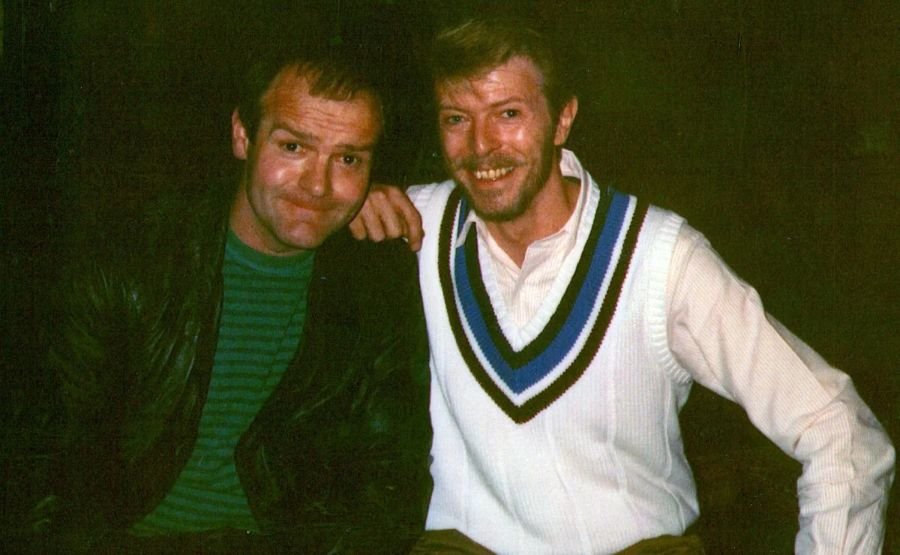
The Dismissal and What it Actually Means
The account from Visconti — quoted on the Bowie Bible website, drawn from his own memoirs — is worth reading carefully. After the Star Hotel, Croydon show on March 30, 1970, which turned out to be Cambridge’s last with Hype, Visconti wrote: “We liked John very much, his presence was very uplifting, but he wasn’t the adventurous drummer we needed to go to the next level. It was done very quickly and before John’s spot on the gallery floor cooled off, Woody Woodmansey moved into Haddon Hall.”
That’s the professional verdict. “Uplifting presence.” “Not adventurous enough.” On April 6, 1970, Bowie told him directly. Cambridge went back to Hull the following day.
The thing I’ve always found striking about this dismissal is its specificity and its casualness. “Uplifting presence” is warm praise for someone you’re firing. The decision to bring in Woodmansey came from Ronson, who told Bowie he knew a better drummer — apparently meaning the same drummer who had replaced Cambridge in The Rats, the same drummer who had taken over from him in Hull. Cambridge recruited Ronson. Ronson recommended the drummer who took Cambridge’s job. The circular nature of this — the Hull pipeline flowing back on itself — is either poetic or just the way tight-knit music scenes work, depending on your disposition.
What Cambridge himself wrote in Bowie, Cambo & All the Hype is, by all accounts, not bitter. The book, published in 2021, is described consistently across reviews as warm, funny, and moving. A story of friendship that “survived the Hype,” as the publisher puts it. He’s not bitter in print. But it would be reasonable to ask whether he had something to be bitter about, and to answer that question honestly.
The Counterfactual That Bowie History Avoids
Let’s be honest about what the replacement of Cambridge by Woodmansey actually meant for the shape of Bowie’s career. Cambridge was fired on April 6, 1970. Recording for The Man Who Sold the World began in April 1970. Woodmansey played the album. That album established the Bowie-Ronson-Visconti-Woodmansey creative core that then went on to make Hunky Dory, The Rise and Fall of Ziggy Stardust, Aladdin Sane, and Pin Ups. That run of albums, in three years, made David Bowie one of the most significant musical figures of the twentieth century.
Cambridge played on the Space Oddity LP, which had already been recorded in 1969. He played the early sessions, the Peel shows, the Hype gigs. He brought Ronson in. And then he was replaced six weeks after the band first formed with Ronson in it.
What the coverage never quite reckons with is that Cambridge’s contribution was structural, not musical. He wasn’t replaced because his drumming was bad. He was replaced because a better drummer was available and Ronson knew where to find him. The Hype as a creative enterprise needed to go somewhere Cambridge couldn’t take it. Fine. That happens in music all the time. But the man who built the bridge doesn’t always get to cross it.
The Wedding and the Train Back to Hull
This is the detail that I think matters most and gets the least attention. On March 20, 1970, John Cambridge served as David Bowie’s best man when Bowie married Angela Barnett. The ceremony was at Bromley Register Office. Cambridge was standing at Bowie’s side at the moment that both seemed to be beginning.
Seventeen days later, he was informed his services were no longer required.
You don’t ask your drummer to be your best man and then fire him three weeks later if you’re treating either role with full gravity. Either the friendship was real enough to survive the professional relationship ending, or the friendship meant less to Bowie in the moment than the need for a better drummer. Cambridge appears to believe, based on his book’s tone and content, that the friendship was genuine and endured. He describes Bowie in warm terms throughout. He attended Bowie’s memorial events. He maintained the connection.
But I keep coming back to the timeline. Best man on March 20. Gone on April 6. That’s seventeen days.

What Came After, Which Is Barely Documented
The post-Hype record for Cambridge is thin. He tried to form a band in 1973 with John Hutchinson, Trevor Bolder, and Mick Woodmansey — the same Woodmansey who had taken his seat in 1970 — but it came to nothing. His membership in The Rats, Junior’s Eyes, the Tony Visconti Trio, David Bowie & The Hype, Dib Cochran & The Earwigs, and The Southern Comfort Band is listed on his Discogs page. There’s no great post-Bowie career. There’s no solo record. There are the sessions from 1969 and early 1970 and then, largely, a silence in the official record.
What there is, eventually, is the book. Fifty-one years after the dismissal, in September 2021, Bowie, Cambo & All the Hype was released. By all reviewer accounts it’s affectionate rather than aggrieved. It’s a man telling a story about a friendship and a brief, pivotal moment in rock history that he was at the center of, in a way that the official histories have tended to elide.
You might argue that’s a kind of grace. You might also argue it’s the only framework available to someone in his position — the man at the margin of a story that became enormous, looking at it from the outside and choosing warmth over bitterness because bitterness would be accurate and warmth is more livable.
See also “Julie Ann Reubens: The Steady Anchor in John McVie’s Turbulent World“
My Honest Judgment
John Cambridge did three specific, historically significant things: he brought Mick Ronson to David Bowie; he played drums on the sessions and shows that constituted the proto-Spiders period; and he was best man at Bowie’s first wedding. Then he was fired and replaced by the drummer he had previously replaced in Hull. He spent fifty years largely outside the official Bowie narrative before publishing a memoir that the Bowie world received warmly as a peripheral document.
The coverage treats him as a transitional figure — someone between what Bowie was and what he became, a placeholder drummer who happened to find the right guitarist. This is accurate as far as it goes and completely wrong in its implications. “Transitional” suggests he was passive, a conduit rather than an agent. He wasn’t. He made active choices that shaped everything that came after. He walked back to Hull. He found the reluctant gardener. He sold him on the idea.
The historiography of rock is full of people who were decisive at the crucial moment and invisible in the aftermath. John Cambridge is a clear example. The very fact that his replacement came from his own musical world — that Woodmansey was the drummer he had preceded in The Rats — gives the whole story a kind of tight poetic irony that a novelist would be embarrassed to invent.
He deserved a better beat in the story. He got a book instead. I’m glad he wrote it.
FAQs
1. Who is John Cambridge?
An English drummer from Hull who played in The Rats with Mick Ronson, then Junior’s Eyes in London, then David Bowie’s backing band The Hype in early 1970. He is most historically significant for recruiting Mick Ronson to join Bowie — a connection that led to the Spiders from Mars and the Ziggy Stardust era. He was fired from The Hype in April 1970 and replaced by Mick Woodmansey.
2. What did John Cambridge actually play on?
He played on the sessions for Bowie’s Space Oddity album (1969) as part of the Junior’s Eyes connection. He played the early Hype shows with Mick Ronson, including the landmark John Peel BBC Radio 1 session on February 5, 1970. He is also present on BBC sessions later compiled on releases including The Width of a Circle box set.
3. Why was Cambridge fired from The Hype?
Tony Visconti described it as Cambridge not being “the adventurous drummer we needed to go to the next level.” Ronson had also told Bowie and Visconti that he knew a better drummer in Hull. The decision was made quickly; Woodmansey moved into Haddon Hall almost immediately after Cambridge was told.
4. Who replaced Cambridge and what’s the irony?
Mick “Woody” Woodmansey — who had previously replaced Cambridge in The Rats back in Hull. The man who took Cambridge’s seat in his hometown band then took his seat in David Bowie’s band, having been recommended by the guitarist Cambridge himself recruited.
5. How did Cambridge recruit Mick Ronson?
He returned to Hull in January 1970 specifically to find Ronson, who at the time was working as a municipal gardener for Hull City Council and was found marking lines on a rugby pitch. Cambridge convinced a reluctant Ronson to come to London. Within two days of meeting Bowie, Ronson was performing on a national BBC Radio 1 show with him.
6. What was Cambridge’s role at Bowie’s wedding?
He served as best man when Bowie married Angela Barnett at Bromley Register Office on March 20, 1970. He was fired from The Hype seventeen days later on April 6.
7. What happened to Cambridge’s career after 1970?
It is sparsely documented. He briefly attempted to form a band with John Hutchinson, Trevor Bolder, and Mick Woodmansey in 1973 that never materialized. He appears on limited session work. His Discogs profile lists a small number of band memberships. He published his memoir in 2021.
8. What is Bowie, Cambo & All the Hype?
Cambridge’s autobiography, published by McNidder and Grace in September 2021. It covers his friendship with Bowie from 1969 through Bowie’s death in 2016. Reviewers describe it as warm, funny, and affectionate rather than bitter — a characterization that seems to reflect how Cambridge has processed what happened.
9. Was Cambridge bitter about being fired?
Not publicly, based on all available evidence. The book’s tone is described consistently as warm. He maintained contact with Bowie’s world for decades. He attended memorial events. Whether he felt privately aggrieved, he has chosen not to say so on record.
10. How significant is his contribution to Bowie’s career?
Structurally enormous. Without Cambridge’s recruitment of Ronson, the Spiders from Mars as we know them don’t exist. Ronson’s guitar arrangements, his playing, his co-creative role with Bowie were essential to the Ziggy Stardust period. Cambridge was not around for any of that music. But he made the introduction that made the music possible.
11. Why doesn’t Cambridge get more credit in Bowie histories?
Because he was there for approximately six months — from the Space Oddity sessions through the early Hype period — and was not present for any of the work that made Bowie a legend. Histories tend to tell the story backward from success, and Cambridge’s contribution was a prerequisite for success rather than a component of it. He brought the guitarist. The guitarist made the albums. Cambridge wasn’t in the room.
Find fresh stories beyond the spotlight with Celebs Flare.



One Comment