Patsy Cline Children: Did the Country Music Legend Have Any Kids?
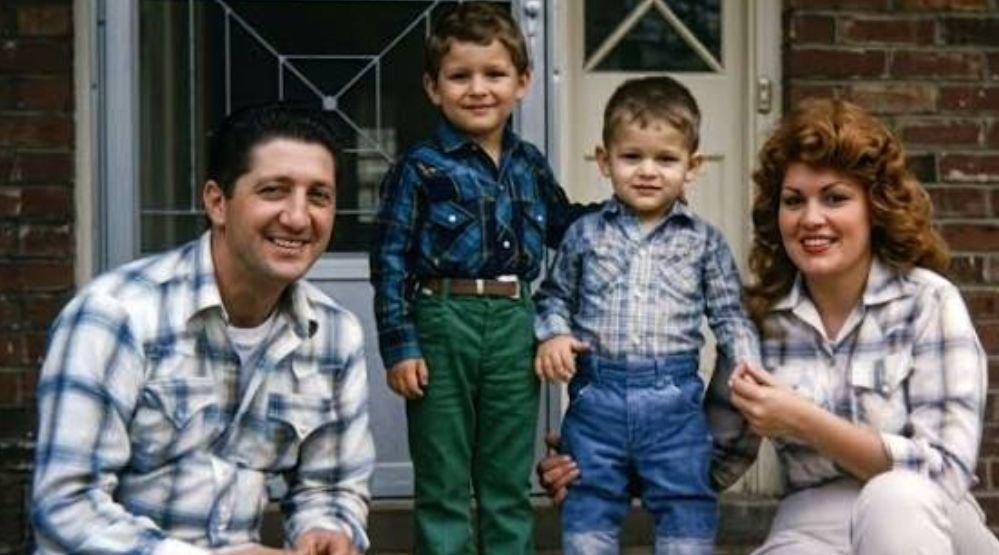
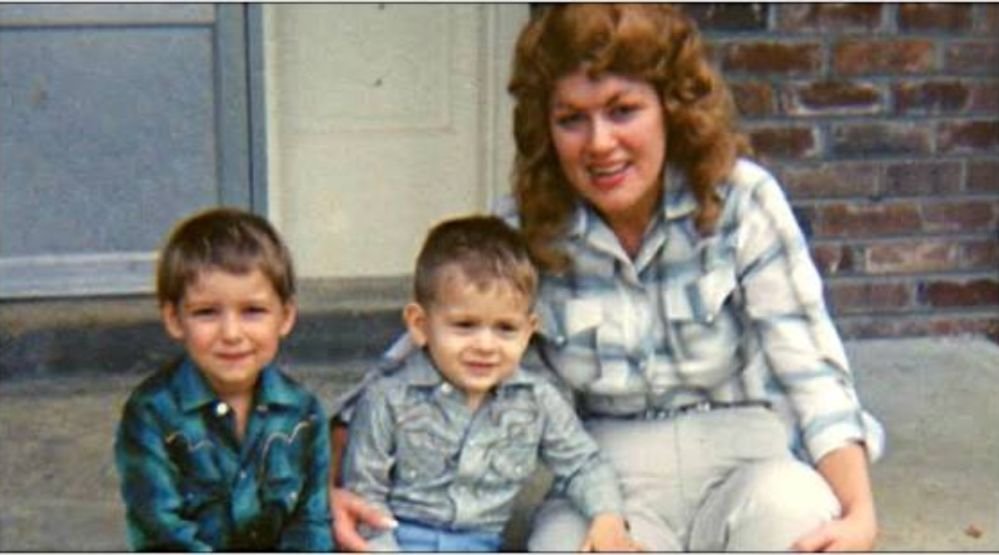
Here is what nobody bothers to say plainly when they write about Patsy Cline’s children: both of them were so young when she died that neither has any substantive personal memory of their mother. Julie was four years old. Randy was two. You can search the entire internet for a quote from either of them describing a specific memory of Patsy Cline as a living person — something she said to them, something she cooked, the sound of her voice in a room — and you will come up mostly empty. What you will find instead is Julie talking about the legacy and Randy playing drums somewhere in Nashville and two dozen content-farm websites that can’t even get the number of children right, inventing a third kid named Cindy or misidentifying the crash pilot as Patsy’s son. The story of Patsy Cline’s children is, at its most honest, the story of two people building adult identities around a mother they barely knew, and an industry that has turned that process into an ongoing commercial enterprise. That’s not a criticism. It’s the thing that’s actually interesting, and it’s the thing that almost nobody says.
Quick Bio
| Detail | Info |
| Patsy Cline’s children | Exactly two: Julie and Randy. Both with second husband Charlie Dick only |
| First marriage | Gerald E. Cline (married 1953, divorced 1957); marriage was childless — no children |
| Julie Dick (later Julie Fudge) | Born August 25, 1958; was 4 years old at Patsy’s death, March 5, 1963 |
| Randy Dick (Allen Randolph Dick) | Born January 22, 1961; was approximately 2 years old at Patsy’s death |
| After Patsy’s death | Per Patsy’s will, her mother Hilda Hensley took custody of Julie and Randy |
| Charlie Dick’s later life | Remarried; had a son, Charles Dick Jr.; died November 8, 2015, age 81 |
| Julie’s current role | Heads Patsy Cline Enterprises; manages estates of both parents |
| Randy’s current profile | Low-key; reportedly plays drums in Nashville; rarely gives interviews |
| Randy Hughes | The pilot who died in the crash — not Patsy’s son, as some sites falsely claim |
| “Cindy” as third child | Fabricated by content farms; does not exist |
The Fabrication Problem, Front and Center
Before anything else needs to be said about these two actual human beings, the internet’s specific failures around them deserve naming out loud. Let’s be honest: the coverage of Patsy Cline’s children is one of the more concentrated examples of content-farm breakdown you’ll encounter in any celebrity-adjacent topic. One site invents a third child named “Cindy” and describes her life with the same confident warm prose used for Julie and Randy, apparently because three is a rounder number than two, or because the template called for additional content. Another site calls Randy’s name “Randy Hughes” — which is the name of the pilot who flew the plane that crashed on March 5, 1963, killing Patsy, Cowboy Copas, Hawkshaw Hawkins, and Hughes himself. Confusing a dead child’s father’s manager and pilot with the child who survived his mother is not a small error. It’s the kind of error that tells you nobody checked a single primary source.
There are age discrepancies everywhere. Some sites say Julie was six when her mother died. She was four. Some say Randy was born in 1955 or 1957. He was born January 22, 1961, making him barely two years old on the day of the crash. The spelling of Julie’s middle name — Symadore, Simadore, Sidamore — shifts from article to article. These are all the same person, rendered through a game of telephone between sites that never went to a primary document. And all of it matters because if you can’t get these basic coordinates right, you’re not actually telling the story of two real people who grew up without a mother. You’re decorating around a legend.
See also”Mallory Plotnik: Biography, Family, Career, and Life with Phil Wickham“
The First Marriage That Produced No Children
You have to clear this up because several sites don’t. Patsy Cline — born Virginia Patterson Hensley — married Gerald E. Cline in March 1953. She took his name, which is why we know her as Patsy Cline and not Patsy Hensley or Patsy Dick. She was with Gerald for four years. The marriage was childless. The Encyclopedia Virginia is explicit about this: “the childless couple divorced in Maryland on March 28, 1957.” Gerald was reportedly jealous of her career and frustrated that she wouldn’t stay home in the traditional housewife role he’d expected. She left him.
Two months later she married Charlie Dick, a linotype operator. She was pregnant within the year. Julie was born August 25, 1958. The marriage was, by many accounts, tumultuous in the specific way that creative and strong-willed people sometimes make tumultuous marriages. Charlie Dick disputed the worst of it — when Entertainment Tonight called him after the 1985 film Sweet Dreams and asked if he’d hit Patsy, he said he was “flabbergasted” by the question and pushed back. But he also acknowledged the film was “about 50 percent true,” which implies the other fifty percent was real enough to recognize. They were together until she died. He never stopped carrying her legacy. Whatever the marriage actually contained, and the honest record is genuinely mixed, it produced two children who became his responsibility the moment the plane went down.

Randy Hughes and Why This Matters
You need to understand who Randy Hughes was, because the confusion between him and Patsy’s son Randy Dick keeps appearing in the record and it does actual damage to the story.
Randy Hughes was Patsy’s manager. He was also the pilot of the Piper Comanche that crashed near Camden, Tennessee on March 5, 1963, killing all four people aboard. He was married to Kathy Copas, daughter of Cowboy Copas, who was also on the flight. Randy Hughes was thirty-five years old. He had no biological connection to Patsy Cline. He was an adult professional in her orbit who made the decision to fly home in deteriorating weather conditions after a Kansas City benefit concert.
Patsy’s son, Allen Randolph Dick, goes by Randy. He was given a name that may refer to Randy Hughes, but this is not verified. He was born January 22, 1961. When the crash happened fourteen months later, he was a toddler. He has no memory of his mother that was formed by living experience. That’s the Randy in this story. Getting the two Randys confused isn’t just a factual error — it erases the specific tragedy of a two-year-old losing his mother, which is the most emotionally significant fact in the entire account.
What Hilda Did, and Why the Will Matters
Patsy Cline made arrangements. She was someone who thought about death — she told friends including June Carter, Loretta Lynn, and Dottie West that she had premonitions of her own, well before March 1963. Her will specified that if she died, her mother Hilda Hensley should take the children. Not Charlie. Her mother.
That’s worth sitting with. In 1963, leaving custody instructions to your mother rather than your husband was a deliberate choice. Charlie Dick was the children’s father and he was alive, which would normally settle the custody question automatically. That Patsy’s will specified Hilda suggests something about what she thought of Charlie’s stability as a sole parent, or perhaps just what she thought of her own mother’s competence in that role, or possibly a more complicated family dynamic than the coverage ever fully explores. Hilda took Julie and Randy as Patsy had wished. Charlie later remarried and had a son, Charles Dick Jr., from that second marriage. Eventually Julie and Randy grew up in the orbit of their father’s ongoing effort to preserve their mother’s estate.
Charlie Dick spent decades doing exactly that — running Legacy Inc., working with Decca and later MCA, promoting Patsy Cline’s Greatest Hits which became the sustained commercial success that kept royalty checks arriving. He attended the fan club events in Winchester. He gave interviews. He took Julie to the Hollywood Walk of Fame ceremony in 2014 when Patsy received her star. He died in November 2015 and was buried beside Patsy at Shenandoah Memorial Park in Winchester. Whatever the marriage had been, the afterlife of it was genuine.
The Thing About Being Four and Two
Here is what I keep coming back to, and what the coverage almost never dwells on because it’s too plainly sad to be packaged into legacy content. Julie Cline was four years old. Randy Dick was two. Those ages mean something specific about what kind of grief is even possible.
At four, you have some memories. Impressions. The smell of a room, the feel of someone’s hands, a sound. You don’t have narratives. You don’t have the biographical content to say “I remember when my mother taught me something.” You have fragments. And at two, you have essentially nothing. You have photographs. You possess what others communicate to you. You have a hole in the shape of a person that you carry without knowing exactly what went in it.
Look at what that means for Julie’s role in the legacy industry. She has spent her adult life — as Patsy Cline Enterprises, as the voice of her mother’s estate — interpreting a person she experienced for four years before memory fully consolidates. Her inputs into the film Sweet Dreams, her contributions to documentaries, her perspective on what Patsy Cline was like as a real person — all of it is filtered through grief over someone she knows primarily through other people’s accounts and recorded media. That’s not a criticism. That’s a genuinely difficult position to be in, and Julie has been in it for over sixty years.
Randy has apparently made a different choice. The coverage that’s reliable gives him a low profile — he reportedly plays drums in Nashville, he’s mentioned at his father’s death as surviving family, he shows up in scattered references but not in the machinery of legacy management. Whether this is preference or temperament or something else that nobody has ever thought to ask about directly is unknown. One source on The Tombstone Tourist site gives the most specific Randy detail I could find: “Randy Dick, Patsy’s son, stays under the radar and plays drums with a local Nashville band.” That’s it. Sixty-plus years old, living his life in Nashville, mostly out of the frame that his sister occupies. If that’s an option, it holds significance.
The Industry Built on Memory
You have to understand that Patsy Cline Enterprises exists because Patsy Cline’s music has never stopped selling. Patsy Cline’s Greatest Hits has spent over seven years on the US album charts in aggregate. “Crazy” and “I Fall to Pieces” are not archival curiosities — they’re active commercial properties. There are licensing decisions. Tribute approvals. Documentary consultations. Museum involvement. The Historic Home of Patsy Cline located in Winchester. The Hollywood Walk of Fame star. All of this requires someone to be the family’s institutional voice, and that person is Julie.
Let’s be truthful about what that actually signifies in practice. Julie Fudge is simultaneously the inheritor of a mother she didn’t really know and the CEO of a business built on that mother’s image. She is both the grieving daughter and the rights holder. She offers the genuine human touch that the estate’s business activities need — the “I experienced it, I recall, here is her true nature” that transforms a legal copyright into a living legacy — while also making the decisions that keep that estate financially viable. That’s a lot to hold. The coverage presents it as purely devotional, which is partly true and also partly an incomplete picture of what managing a commercially significant estate actually involves.
My Honest Assessment
I’ve been following the coverage of this topic for years, and here is what I think the real story of Patsy Cline’s children actually is. It’s not the warm legacy narrative — “Julie and Randy keeping their mother’s memory alive” — though that’s true as far as it goes. It’s the story of two people who experienced one of the most specific and particular kinds of loss there is: losing a parent before you’re old enough to build lasting memories of them. Then growing up inside the commercial processing of that loss. Then spending their adult lives as custodians of an identity they were too young to have known from the inside.
Julie took the active role. Randy took the quiet one. Both of those are comprehensible responses to an incomprehensible situation. The bitterness I feel isn’t toward them or toward Patsy’s music or even toward Charlie Dick, who appears to have genuinely loved his wife and genuinely tried to honor her. The bitterness is toward a coverage ecosystem that invents third children, names the crash pilot as the son, gets the ages wrong, spells the middle name six different ways, generates hundreds of words about “Julie and Randy’s devotion to their mother’s legacy” and never once asks what it actually costs to build your adult identity on a four-year-old’s memories of someone the whole world also claims to own.
These are real people. They were real children. They deserved at minimum for the internet to know how many of them there were.
FAQs
1. What was Patsy Cline’s child count?
Two. Exactly two. Julie Dick (born August 25, 1958) and Randy Dick, whose full name is Allen Randolph Dick (born January 22, 1961). Both children are from her second marriage to Charlie Dick. Her first marriage to Gerald E. Cline was childless. Any website that mentions a third child named “Cindy” is fabricating information.
2. Who are Patsy Cline’s children?
Julie Simadore Dick, now Julie Fudge, and Allen Randolph “Randy” Dick. Julie runs Patsy Cline Enterprises and manages both her parents’ estates. Randy keeps a much lower public profile and reportedly plays drums with a Nashville band.
3. Did Patsy Cline have children from her first marriage?
No. Her first marriage, to Gerald E. Cline, lasted from 1953 to 1957 and was explicitly childless. Multiple reliable sources including the Encyclopedia Virginia confirm this. Websites claiming Julie was from the first marriage are incorrect.
4. How old were Patsy Cline’s kids when she died?
Julie was four years old. Randy was approximately two years and a month old. Neither was old enough to have formed consolidated biographical memories of their mother. This is the central fact about their relationship to Patsy Cline that most coverage papers over.
5. What happened to Patsy Cline’s children after she died?
Per Patsy’s will, her mother Hilda Hensley took custody of Julie and Randy. Charlie Dick, their father, remained in their lives and spent decades managing Patsy’s commercial legacy through Legacy Inc. He remarried and had a son, Charles Dick Jr., from that later marriage. Charlie Dick died November 8, 2015, and was buried beside Patsy in Winchester.
6. Who is Randy Hughes and is he related to Patsy Cline?
Randy Hughes was Patsy Cline’s manager and the pilot of the Piper Comanche that crashed on March 5, 1963, killing Patsy, Cowboy Copas, Hawkshaw Hawkins, and Hughes himself. He had no biological relationship to Patsy Cline. He is not her son. He is sometimes confused with Randy Dick, Patsy’s actual son, in poorly researched content.
7. What does Julie Fudge do today?
Julie Dick Fudge heads Patsy Cline Enterprises, the family’s official estate management operation. She consults on film and documentary depictions of her mother, manages licensing and legacy decisions for both her parents’ estates, and serves as the primary public family voice for the Patsy Cline brand.
8. What does Randy Dick do today?
He maintains a low public profile. He has been described in at least one source as playing drums with a local Nashville band. Unlike his sister, he does not appear to be actively involved in the Patsy Cline estate’s public operations. He was mentioned as a surviving family member when Charlie Dick died in 2015.
9. Is Charlie Dick Jr. related to Patsy Cline?
He is Charlie Dick’s son from his second marriage, after Patsy’s death. He is Patsy Cline’s widower’s son but has no biological connection to Patsy herself. He is a half-sibling to Julie and Randy.
10. Did Patsy Cline know she was going to die?
Multiple documented sources report that Patsy shared premonitions of her death with friends including June Carter, Loretta Lynn, and Dottie West as early as September 1962, months before the March 1963 crash. Whether this represented genuine premonition or dark anxiety is obviously impossible to determine. What’s clear is that she made a will specifying custody arrangements for her children, which suggests she was thinking practically about the possibility.
11. How is the Patsy Cline estate managed?
Through Patsy Cline Enterprises, headed by Julie Fudge. The estate controls music licensing, image rights, tribute approvals, documentary consultations, and related commercial decisions. Charlie Dick managed the estate through Legacy Inc. until his death in 2015, at which point Julie took over. The continued commercial viability of Patsy’s catalog — Greatest Hits alone has spent years on the charts — makes the estate a substantial ongoing business, not merely a memorial operation.
Find fresh stories beyond the spotlight with Celebs Flare.




One Comment