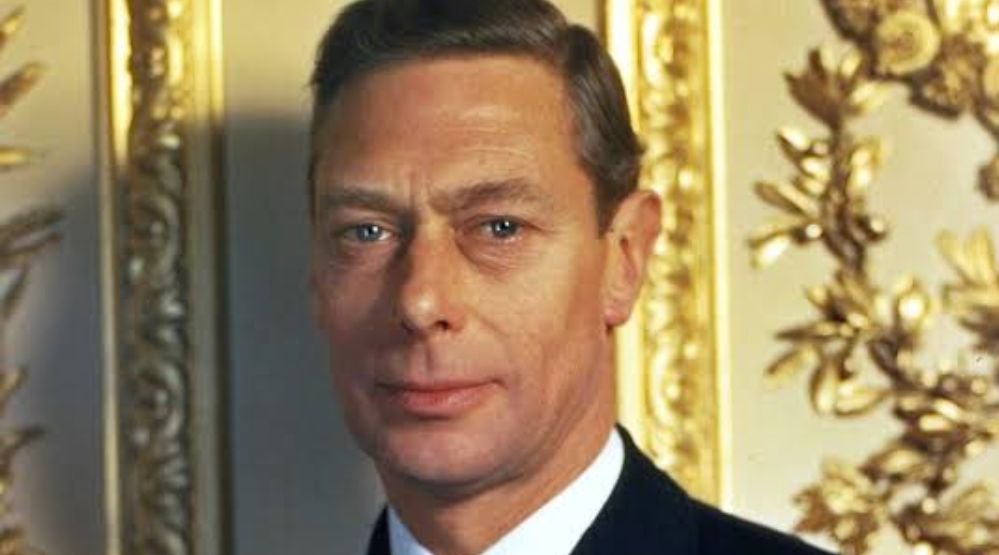
George VI: The King Who Led Britain Through World War II
Here is the thing nobody wants to acknowledge about George VI: the story most people know about him — the stammering second son thrust unwillingly onto the throne, saved by an unconventional Australian, heroically staying in London while bombs fell — is true, and it is also, in its popular telling, an almost complete evasion of everything complicated about the man. You get the stammer. You get Colin Firth’s jaw working through syllables. You get the Blitz visits and the bombed-out palace and the image of quiet dignity against the darkness. What you don’t get is the Buckingham Palace balcony in September 1938, with a king standing beside Neville Chamberlain while crowds cheered below, after Munich, after Czechoslovakia had been sold. What you don’t get is a man who was never told he had cancer, by the people closest to him, and died not knowing. What you don’t get is the last Emperor of India, standing over a title attached to generations of extraction and violence, disappearing from the heroic portrait before you can look directly at it.
George VI deserves honest examination. That’s not the same as the examination he gets.
Quick Bio
| Detail | Info |
| Born | Albert Frederick Arthur George, December 14, 1895, Sandringham, Norfolk |
| Became king | December 11, 1936, following Edward VIII’s abdication |
| Stammer therapy | Began working with Lionel Logue October 1926 — a decade before The King’s Speech implies |
| Munich, 1938 | Personally invited Chamberlain to appear on Buckingham Palace balcony; went beyond constitutional neutrality |
| Wartime | Remained in London through the Blitz; toured bombed areas; boosted morale; a genuine service |
| Empire title | Last Emperor of India; relinquished the title in 1948 following Indian independence |
| Cancer concealment | Diagnosed with lung cancer 1951; told only of “structural changes”; neither he nor the public was given the cancer diagnosis |
| Cause of death | Coronary thrombosis, February 6, 1952, at Sandringham; official statement omitted cancer |
| Age at death | 56 |
| Primary biographers | John Wheeler-Bennett (official); Sarah Bradford; William Shawcross |
The Decade The King’s Speech Quietly Stole
Let’s start with the film, because the film is why most people think they know George VI at all. The King’s Speech won four Oscars in 2011 and introduced a generation to the stammering king through Colin Firth’s genuinely moving performance. It also, as historian Andrew Roberts pointed out almost immediately, compressed the timeline of the relationship with Lionel Logue by approximately ten years in a way that fundamentally distorts what actually happened.
Albert, Duke of York, first consulted Logue in October 1926, three full years after his excruciating appearance at the British Empire Exhibition at Wembley in 1925. He worked with Logue steadily through the late 1920s and 1930s. By the time he gave his 1927 address to the Australian Parliament, witnesses reported a marked improvement. The film presents the collaboration as beginning in the mid-1930s in a compressed panic before the abdication — which makes better drama but erases a decade of quiet, determined, consistent effort that is arguably more revealing of George VI’s actual character than the dramatic version. The real story is less cinematically urgent. It’s a man showing up to hard work for years, not a man saving himself in a crisis. The distinction matters for how you understand who he was.
There are other inaccuracies. Churchill in the film is presented as an early champion of George VI over the abdicating Edward — but historically, Churchill was Edward VIII’s most vigorous defender and resisted the abdication to the end. George VI himself, facing the choice of prime ministers in 1940, reportedly preferred Lord Halifax to Churchill, and was persuaded otherwise by events. These are not minor quibbles. They rewrite the political history of the monarchy’s wartime alignment.
See also “The Legend That Built Itself: On Chris Kyle“
The Balcony Nobody Talks About
This is the part that genuinely frustrates me, and it should be much more present in the coverage than it is. After the Munich Agreement was signed on September 30, 1938, Neville Chamberlain returned to London and was driven, at George VI’s personal request, directly to Buckingham Palace. The king invited him onto the balcony. They stood together while crowds cheered below. The invitation was unprecedented. It was constitutionally irregular. And it was a statement.
Look at what this means. A constitutional monarch is supposed to be above the political fray, to work with the government of the day rather than to endorse specific policies. George VI, in that moment, went visibly beyond the convention. He put the crown’s public prestige behind appeasement in a way that was noticed at the time by those who opposed the policy. The historian Julie Gottlieb has written directly about how the king and queen actively went “out of their way to be identified with the Prime Minister Neville Chamberlain” during the Munich crisis. They were not secret Nazi sympathizers — this must be said clearly, and the comparison with Edward VIII must be made clearly in the other direction. But “not a Nazi sympathizer” and “behaved with constitutional propriety” are not the same thing, and the popular narrative of George VI’s wartime heroism tends to skip silently from the abdication in 1936 to the Blitz of 1940 without pausing on 1938.
Within a year of that balcony moment, Britain was at war with Germany. Within two years, Chamberlain was gone and Churchill was prime minister. The king adapted, genuinely and effectively. His wartime role is real. But the Munich balcony is also real, and it represents something about a man who was constitutionally aligned with power, who followed the government of the day as a constitutional monarch should and also went somewhat beyond that convention in an endorsement he might later have wished to reconsider.
What His Father Did to Him
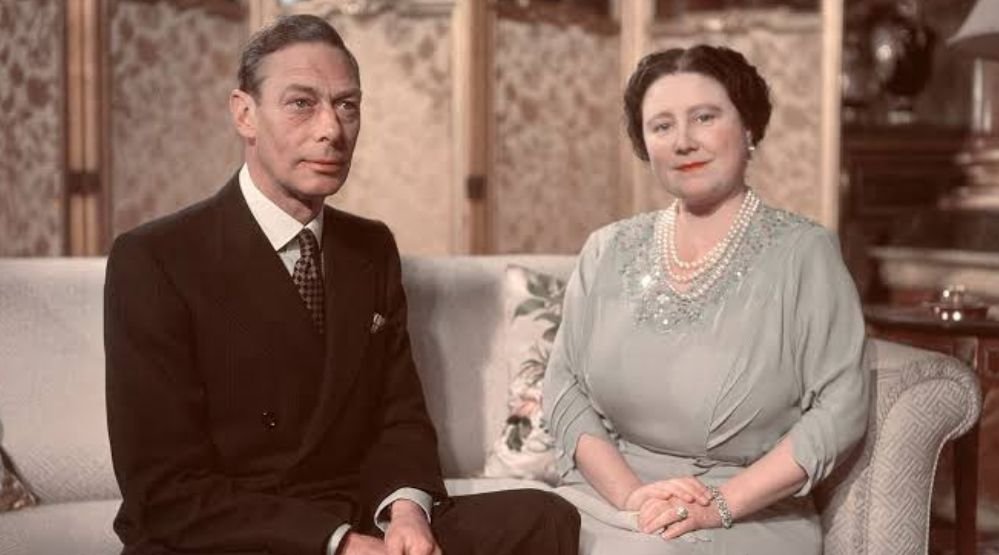
The psychological background matters here and the coverage sometimes overdoes it, reaching for armchair Freudianism, so let me try to be precise. George V was a man of the Victorian navy, emotionally constrained, ferociously demanding of his children, given to humiliating them in company. He forced young Albert to write with his right hand when he was naturally left-handed. He gave him steel splints to correct knock knees that appear in retrospect to have been a nightmare for a child’s comfort and confidence. He bullied him. And Queen Mary, his mother, was by virtually every account cold and emotionally inaccessible — a product of a particular aristocratic tradition in which demonstrating affection to your children was simply not done.
Whether this caused the stammer is a matter of genuine medical debate. Stammering has multiple etiologies and the “emotional trauma causes stammering” model has been considerably complicated by neurological research since the mid-twentieth century. What is documented is that Albert grew up in an environment that made the stammer feel like a moral failure rather than a physiological condition, which is its own kind of damage. Logue’s most important contribution may not have been the breathing exercises but the radical reframing: that the stammer was not weakness, not character failure, not the product of a deficient will. That reframing mattered in a household that had never offered it.
His father also, famously and accurately, said of his eldest son David: “I pray to God that my eldest son will never marry and have children and that nothing will interfere with Bertie, Lilibet, and the monarchy He was right. He communicated nothing useful to either son about it.
The Emperor They Don’t Show You
George VI was, among other things, the last Emperor of India. He held that title from his accession in December 1936 until August 1948, when he relinquished it following Indian and Pakistani independence. The title “Emperor of India” came with the weight of the entire apparatus of British colonial rule on the subcontinent — the famines, the extraction, the suppression of the independence movement, the imprisonment of Gandhi and Nehru and hundreds of others throughout the very period when George VI was also being a heroic wartime king.
To be truthful: he didn’t directly request these actions, and the postwar independence process occurred with his assistance rather than in opposition to him. But the popular portrayal of George VI as a kind of pure moral symbol, a man above politics who simply served his people with dignity, carefully excludes the scale of what “his people” meant and what the crown he wore had done on their behalf. The Blitz photographs are real and moving. The empty streets of bombed Coventry that he walked through are real. But the photograph of the palace balcony and the photograph of the colonial officer standing over a famine-stricken field in Bengal in 1943 — when at least two million people died in a famine that the war administration’s policies exacerbated — are also both within his reign. The popular story chooses which photographs to show you.
The Cancer They Kept From Him
Here is something that struck me hard when I first read it carefully and that I don’t think receives nearly enough attention. In September 1951, George VI underwent a three-hour operation to remove his left lung. He was a well-known heavy smoker who had been causing arteriosclerosis by smoking two or more packs of cigarets every day since he was about sixteen years old. Buerger’s disease, and now this. His doctors told him his lungs had “structural changes.” They did not tell him he had cancer. He was not told. The public was not told. His family was told but agreed to maintain the concealment.
The official bulletin posted on Buckingham Palace gates described his postoperative condition as “satisfactory.” It mentioned nothing about cancer. He died on the morning of February 6, 1952, of a coronary thrombosis in his sleep at Sandringham, and the official cause of death statement again omitted the cancer. Churchill told the Commons that the king had “walked with death, as if death were a companion, an acquaintance whom he recognised and did not fear.” The sentence is beautiful and it reveals nothing about what the king actually knew he was dying of, which was nothing — because no one told him.
There is a version of this that is paternalistic Victorian medicine doing what Victorian medicine did, which is to protect patients from truths deemed too distressing. There is another version of this that is a man who served his public role with conspicuous stoicism dying without the information he would have needed to make fully informed decisions about his final year. Princess Margaret wrote, three days after his death, that the family was thankful he had “triumphantly recovered from an appalling operation” — they were under the illusion he was recovering. That’s how complete the concealment was. It went all the way through.
The Real Reluctance and What It Cost
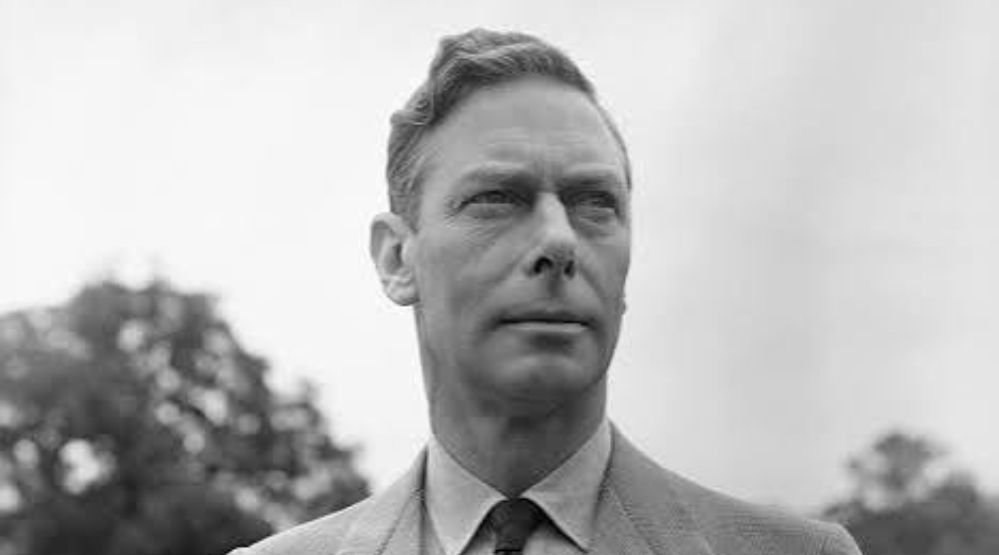
The “reluctant king” framing is accurate and it’s also insufficient. He was genuinely reluctant — he wept when told about the abdication, wept on his mother’s shoulder, said he felt unprepared and unqualified. This is documented. But reluctance is not the same as insufficiency. What he did with the reluctance is the story. He showed up. He worked with Logue for years. He made the wartime broadcasts. He stood in the rubble of bombed East End houses and talked to the people who had lost everything. He sent Elizabeth to Windsor and stayed himself in London. He outlasted the cigarettes and the arteriosclerosis and the gastric troubles long enough to see the war through and long enough to watch his daughter prepare to become the monarch he had never expected to be.
He died at fifty-six. That is very young for a king. The official narrative claims the war made him older; the smoking took his life. Both are true. The monarchy he left to his daughter was in better shape than the one he inherited, which was coming off the disaster of the abdication. That’s a real achievement, achieved by a man who never wanted the job and did it anyway for sixteen years.
My Honest Assessment
I’ve spent years reading around the edges of George VI’s story, and here is what I think is actually true. He was a genuinely decent man in a role that asks you to stand for things that are not always decent. The wartime heroism is real. The Logue relationship was real and genuinely meaningful. The family life — Bertie and Elizabeth and the two girls, the Christmas games at Sandringham, the warmth that his daughters described — appears to have been genuinely good, a conscious repair of the emotional coldness his own parents had practiced.
But the popular narrative, cemented now by a film that compressed his timeline and rehabilitated Churchill’s role and left Munich entirely out, is too clean. A man who stood on a balcony with Neville Chamberlain endorsing a deal that gave Czechoslovakia to Hitler deserves to be in the portrait. A king who was never told by his doctors and family that he had cancer deserves to be in the portrait. The last Emperor of India, reigning over an institution that presided over the Bengal famine, deserves to be in the portrait.
The bitterness is not toward him. It’s toward the machinery that produces one kind of royal portrait and excludes everything that doesn’t fit it. George VI was more interesting, more complicated, and more human than The King’s Speech gave him room to be. The film made him beloved to a new generation. It also made him a simpler man than he was.
FAQs
1. Did George VI really stammer as badly as the film shows?
The stammer was real and genuinely severe in his earlier years. However, he had been working with Lionel Logue since 1926, a decade before The King’s Speech implies. By 1927, his Australian Parliament speech was reportedly much improved. The film’s dramatic compression and some exaggeration of severity have been criticized by historians including Andrew Roberts.
2. Why did George VI become king?
His older brother Edward VIII abdicated on December 11, 1936, to marry Wallis Simpson, an American divorcée. The abdication was also driven, many historians now believe, by Edward’s Nazi sympathies and concerns about his fitness to reign. George VI — called “Bertie” in the family — was the second son, never trained for kingship.
3. Did George VI support appeasement?
Yes, actively. He personally invited Neville Chamberlain to appear with him on the Buckingham Palace balcony after the Munich Agreement in September 1938 — an unprecedented step that went beyond constitutional convention and visibly aligned the crown with the appeasement policy. He was not a Nazi sympathizer in the way Edward VIII was, but his Munich role is frequently omitted from the heroic wartime narrative.
4. Did Churchill and George VI have a good relationship?
Eventually, yes. Initially, George VI reportedly preferred Lord Halifax as prime minister in 1940 and had to be persuaded to accept Churchill. The film’s portrayal of Churchill as an early George VI champion is historically inaccurate — Churchill was Edward VIII’s most prominent defender during the abdication crisis.
5. What caused George VI’s stammer?
This is genuinely debated. The popular narrative links it to his harsh treatment by his father George V and left-handedness correction. Modern speech science complicates this — stammering has neurological components that emotional trauma alone doesn’t fully explain. What’s clear is that the family environment made the condition worse by treating it as weakness.
6. Did George VI know he had cancer?
No. In September 1951 his left lung was removed due to lung cancer, but the doctors told him only of “structural changes.” The cancer diagnosis was withheld from the king himself, from the public, and even from much of the family. He died the following February apparently believing he had recovered from the operation.
7. What was George VI’s relationship to India and the Empire?
He was the last Emperor of India, holding that title from 1936 to 1948. Indian and Pakistani independence occurred during his reign. He cooperated with the process. But the popular wartime portrait of him as a moral symbol sits uncomfortably alongside the Bengal famine of 1943, which killed at least two million people under policies his wartime government administered.
8. Was George VI a good father?
By most accounts, genuinely so — a deliberate contrast with his own cold and bullying father. Elizabeth II’s descriptions of her childhood emphasized warmth and stability. The Logue friendship was apparently one model for it: he learned that relationships could be built differently than his upbringing had taught him.
9. How accurate is The King’s Speech?
Entertaining and emotionally truthful in broad strokes; significantly inaccurate in specific historical ones. The timeline of the Logue relationship is compressed by a decade. Churchill’s role is reversed. The Munich crisis is entirely absent. Logue’s informality with the king is probably exaggerated. Andrew Roberts’s 2011 critique in The Daily Beast laid out the major problems systematically.
10. Why did George VI die so young?
He was fifty-six. He had been a heavy smoker since approximately sixteen, smoking two-plus packs daily for four decades. This produced arteriosclerosis, Buerger’s disease, and lung cancer. Coronary thrombosis was the direct cause of death. The war years added considerable stress to an already compromised system.
11. How is George VI remembered today?
Primarily through The King’s Speech, which shaped a generation’s understanding of him. Within the royal family, Elizabeth II consistently honored his memory as the central relationship of her childhood. Historians have a more complicated assessment — acknowledging the genuine wartime service while noting the Munich balcony, the constitutional overreach, the decolonization question, and the systematic concealment of his illness.
Find fresh stories beyond the spotlight with Celebs Flare.



One Comment