The Legend That Built Itself: On Chris Kyle
Here’s the part of the Chris Kyle story that makes everything else complicated: the man was genuinely, verifiably extraordinary at the specific thing he did in combat. Four tours in Iraq. The most confirmed kills in U.S. military sniper history — 160 officially, with 255 claimed. That’s real. That’s not disputed by the military record. And his work providing overwatch for ground forces in places like Fallujah and Ramadi meant real American lives that didn’t end because he was doing his job at distance with extraordinary skill. That part of the story is documented, decorated, confirmed.
So why, then, did he also apparently feel the need to tell stories that were false? That’s the question his legacy actually poses, and the one almost nobody in the mainstream coverage wants to sit with honestly.
Let’s be honest: the Chris Kyle story is not just a story about a hero. It’s a story about what happens when hero-making runs ahead of the person being made into a hero, and what happens when that person starts meeting the myth halfway.
Quick Bio
| Detail | Info |
| Full name | Christopher Scott Kyle |
| Born | April 8, 1974, Odessa, Texas |
| Military | U.S. Navy SEAL; four combat tours in Iraq (1999–2009) |
| Confirmed kills | 160 (U.S. military official record) |
| Claimed kills | 255 (in American Sniper) |
| Medals (claimed) | Two Silver Stars, five Bronze Stars with “V” device (in book) |
| Medals (verified) | Records showed discrepancies; military.com noted inflated claims |
| Jesse Ventura verdict | Federal jury awarded Ventura $1.8 million for defamation, July 2014 |
| Ventura case appeal | 8th Circuit reversed on procedural grounds, 2016 |
| Ventura settlement | Kyle estate settled with Ventura, undisclosed sum, 2017 |
| Katrina story | Claimed to shoot ~30 looters from Superdome roof; SOCOM stated no West Coast SEALs deployed to Katrina |
| Carjacker story | Claimed to kill two carjackers; local police departments found no record; unverifiable |
| Death | February 2, 2013, Rough Creek Lodge gun range, Erath County, Texas; shot by Eddie Ray Routh |
| Taya Kyle | Widow; continued defamation case; declined interview requests about disputed stories |
What He Actually Did in Combat
You have to start here. You have to because the disputed stories make no sense unless you understand what he didn’t need to embellish.
Chris Kyle entered the Navy in 1999 and became a SEAL. He served in Fallujah and Ramadi during some of the heaviest urban combat American forces experienced in Iraq — cities where the insurgency was entrenched and where sniper overwatch wasn’t a support role but often the difference between a patrol coming back and not. The stories from veterans who served alongside him about what his accuracy and positioning meant for the people he was covering — those are consistent, first-person, cross-corroborated. He protected convoys. He protected assaulting forces. He protected medevac operations. The people who were there, who were in the streets while he was elevated, are generally not the ones questioning his combat record.
His confirmed kill count of 160 is the highest in U.S. military history. The 255 figure in his book represents claimed kills including those not confirmed by the military’s own verification process, which requires corroboration. Both numbers are real in their respective contexts: 160 is verified, 255 is his account.
The medals question is real but also not clean. Military records showed discrepancies between what he claimed and what was formally awarded. The gap between two Silver Stars and five Bronze Stars with “V” devices in his book versus what the official record showed was noted by multiple journalists. The military.com analysis noted the inflation directly. This matters, but it’s also a different category of problem than the other disputed claims — medal inflation among veterans is documented and studied, and the psychological motivations for it are complicated.
The real problem is the stories. Three of them.
See also “Katherine Jackson: The Life, Family, and Legacy of Michael Jackson’s Mother“
The Three Stories
Look, I’ll just lay these out plainly because the separate coverage of each has been splintered enough that you can read about one and not realize there were three.
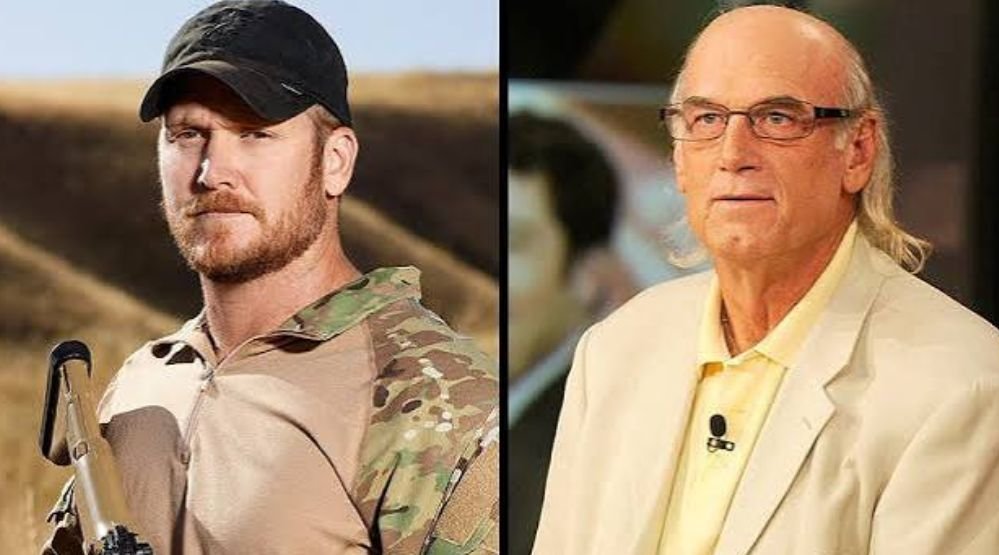
The Ventura Story. In American Sniper, Kyle described punching a man he called “Scruff Face” at McP’s bar in Coronado, California, at an event following the funeral of Navy SEAL Michael Monsoor in 2006. He said Scruff Face made comments about the SEALs deserving to lose men. He said he punched Scruff Face, who went down. In interviews in January 2012, Kyle confirmed Scruff Face was Jesse Ventura — a former Navy UDT member and Minnesota governor. Ventura said none of it happened. A federal jury agreed, awarding $1.8 million in defamation damages in July 2014. The 8th Circuit reversed on procedural grounds related to jury instructions and whether the liability should transfer to the estate in 2016. The Kyle estate then settled with Ventura for an undisclosed sum in 2017. The settlement wasn’t an admission of liability, technically. But the estate paid. That’s a fact.
The Katrina Story. Kyle reportedly told multiple people, including at a SEAL gathering, that after Hurricane Katrina he and another sniper traveled to New Orleans, set up on the Superdome roof, and shot approximately 30 looters. He told it to enough people that The New Yorker’s Michael Hastings and others tracked down multiple witnesses to Kyle telling the story. SOCOM stated that no West Coast SEALs were deployed to Katrina. One of Kyle’s own former superiors, when told the account, said it “defies the imagination.” The story never appeared in American Sniper — Kyle’s co-author Scott McEwen has said Kyle told him that story was cut. McEwen confirmed Kyle told him the story. It was cut. Not because it was verified and removed for operational security, but because the verification wasn’t there.
The Carjacker Story. Kyle reportedly told the story of being stopped at a gas station, approached by two would-be carjackers who drew on him, shooting them both dead, showing his credentials to responding police, and being waved on his way. He told it to D Magazine writer Michael Mooney, who spent months trying to verify it. No local police departments found any record. No hospital reported the wounded or deceased. The story circulated in the media, attributed to Kyle but sourced through his telling of it to friends who told others. Mooney himself concluded he couldn’t verify it. It was never in the book.
Three stories. One resulted in a defamation verdict and subsequent settlement. Two were never verifiable and were effectively rated false by the relevant fact-checking institutions.
The Question That Keeps Getting Avoided
Why? Why would someone with the verified combat record Chris Kyle had — real heroism, real kills, real medals, real service — embellish or fabricate these stories?
The coverage does one of two things with this question. It either ignores it entirely, treating the disputed stories as a footnote to the legend, or it answers it with uncritical sympathy: he was a soldier, he’d been through trauma, maybe the stories blurred. The first approach is dishonest. The second is too easy.
There’s a third possibility that the coverage is reluctant to sit with, which is that the mythologizing was happening during his life and he was participating in it. American Sniper was published in 2012, a year before he died. The book was already generating massive interest. The identity it projected — the deadliest sniper in American history, the uncomplicated Texas warrior, the patriot who killed without regret — was commercially valuable and culturally resonant. Certain narratives that emerged regarding that identity — the Katrina incident, the carjacking tale — contributed to it in manners that the confirmed accounts alone could not.
You can hold two things simultaneously here. You can say: this man served genuinely and was genuinely skilled and genuinely heroic in the specific context of combat. And you can say: some of the stories attached to the legend around that service were not true, and the person at the center of the legend appears to have told some of them himself.
The Clint Eastwood Problem
The 2014 Clint Eastwood film American Sniper, with Bradley Cooper as Kyle, made $350 million at the domestic box office. It was the highest-grossing film of 2014. It generated an enormous cultural conversation about the Iraq War, about veterans, about what we owe them and what they did. Cooper was Oscar-nominated. The movie received a nomination for Best Picture.
The film was based on the book that contained, at minimum, the Ventura story that a federal jury had found to be defamatory earlier that same year. The book entered the film without considering those discoveries. The film itself depicted Kyle as a fundamentally uncomplicated hero — a man who struggled with the gap between combat life and home life but who was at his core exactly what the legend described.
Look, films based on books are not documentaries. The Eastwood film made no claim to be a complete account. But the cultural weight of a $350 million Clint Eastwood film starring Bradley Cooper lands differently than a lawsuit verdict. The verdict happened; the film made more noise. The result is that the popular understanding of Chris Kyle is essentially the film’s version, and the film’s version is essentially the book’s version, and the book’s version contains things that were false.
What the Death Made Possible
Chris Kyle died on February 2, 2013, at the Rough Creek Lodge shooting range in Erath County, Texas. He was shot by Eddie Ray Routh, a veteran he was trying to help as part of his work with veterans experiencing PTSD. Chad Littlefield, Kyle’s friend, was killed alongside him. Routh was convicted of murder in 2015.
The manner of his death — trying to help a troubled veteran at a gun range, killed by the very kind of person he was trying to serve — had an enormous effect on how his story was received after the fact. It made criticism feel indecent. This is human. You don’t challenge someone forcefully when their spouse is just a week into mourning, especially as the nation is reflecting on the tale of a hero who died while serving others.
But the permanent emotional charge around his death has never fully dissipated. The Jesse Ventura lawsuit was already filed when Kyle died. Ventura continuing it was widely condemned as suing a widow — even though Ventura filed before Kyle died and the jury eventually agreed he’d been defamed. The sympathy for Taya Kyle, which was entirely understandable and appropriate, functioned as a kind of ongoing shield against scrutiny of the claims in the book.
My Honest Judgment
Chris Kyle was a genuinely exceptional combat sniper who served four tours in Iraq and is documented as the most lethal in American military history by the metrics the military uses for these things. That’s real. His combat service was real. The people whose lives his overwatch protected — that’s real.
He also told stories that weren’t true, one of which resulted in a federal defamation judgment against his estate and a subsequent settlement. The other two were investigated, found to be unverifiable by the relevant authorities, and rated as false by multiple fact-checking outlets. These weren’t ambiguous exaggerations about the details of a confirmed event. They were stories in which the core events — thirty people shot from a Superdome roof, two carjackers shot at a Texas gas station — left no trace anywhere they should have.
The coverage of Chris Kyle has been almost uniformly unwilling to hold both of those things simultaneously. It either celebrates the legend without qualification or attacks it without acknowledging what was real.The truthful stance is more challenging: a man who accomplished remarkable feats in battle and who, while creating a celebrity persona based on that service, recounted false stories. The former is documented. The latter is documented. Neither erases the other, and treating one as though it does is its own kind of distortion.
FAQs
1. Was Chris Kyle really the deadliest sniper in U.S. military history?
By the official military record of confirmed kills — 160 — yes. The 255 figure in his book includes unconfirmed kills, which is a different category. The 160 is the highest confirmed count in American military history.
2. What were the disputed claims in American Sniper?
The Ventura bar fight story (resulted in defamation judgment); the claim of two Silver Stars and five Bronze Stars with “V” devices (official records showed discrepancies); and circulating stories about the Katrina shootings and Texas carjackers that weren’t in the book but that Kyle reportedly told to people.
3. Did Jesse Ventura win his lawsuit against Chris Kyle?
A federal jury awarded Ventura $1.8 million in July 2014. The 8th Circuit Court of Appeals reversed the verdict in 2016 on procedural grounds related to jury instructions. The Kyle estate then settled with Ventura for an undisclosed sum in December 2017.
4. Did Kyle shoot looters in New Orleans after Hurricane Katrina?
SOCOM stated no West Coast SEALs were deployed to Katrina. One of Kyle’s own former officers, when told the account, said it “defies the imagination.” This story was never in the book and is rated false by multiple sources.
5. Did Kyle kill two carjackers in Texas?
The story was investigated by D Magazine; no police records, hospital records, or other corroboration were found in any relevant jurisdiction. Rated false.
6. Why did Kyle tell these stories if they weren’t true?
Kyle is dead and can’t answer. His widow declined interview requests on the disputed stories. Possible explanations range from embellishment in a social context that compounded, to active myth-building around an identity that had commercial value, to psychological dynamics that aren’t reducible to simple dishonesty. None of those are verifiable now.
7. Is American Sniper a reliable autobiography?
Portions of it are verified by military records and by fellow veterans. Portions of it — most notably the Ventura passage — were found to be defamatory by a federal jury. It should be read as what it is: an autobiography written with co-authors, not a verified historical document.
8. Did the Clint Eastwood film address the disputed claims?
No. The film does not address the Ventura lawsuit (which was ongoing during production), the Katrina story, the carjacker story, or the medal discrepancies. It presents Kyle’s story as essentially uncontested.
9. How did Kyle die?
He was shot on February 2, 2013, at the Rough Creek Lodge shooting range in Erath County, Texas, by Eddie Ray Routh, a veteran he was attempting to help with PTSD-related issues. Kyle’s friend Chad Littlefield was also killed. Routh was convicted of capital murder in 2015 and sentenced to life in prison without parole.
10. Is it possible to honor Kyle’s service while acknowledging the disputed claims?
Indeed, that is truly the intellectually honest stance. His combat record was real. The disputed stories were apparently false. Those aren’t mutually exclusive conclusions, and the coverage that treats them as though they are — on either side — is distorting the actual record.
11. What’s the fairest single-sentence summary of Chris Kyle?
He was a genuinely exceptional combat sniper whose documented military service was real and significant, and who also, in the construction of his public identity, told stories that were false — and the cultural conversation about him has been largely unable to hold both of those facts in the same frame.
Find fresh stories beyond the spotlight with Celebs Flare.

One Comment