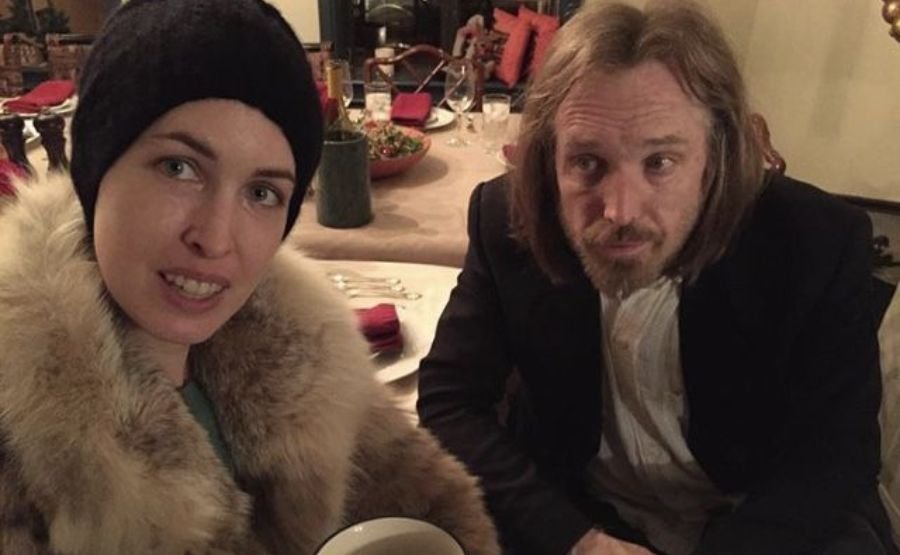
Annakim Petty: The Free-Spirited Artist Behind Tom Petty’s Legacy
Every piece written about Annakim Violette Petty eventually stops being about her. You can feel it happening in real time — a paragraph about her art, maybe two, and then the whole thing pivots back to her father. Who he was. What he meant. How she carries his legacy. She becomes a supporting element in her own profile, and the coverage acts like that’s fine, like that’s just the deal you sign when you’re a rock legend’s kid.
Let’s be honest: the coverage isn’t entirely wrong that the legacy is central to her life. But what it consistently gets wrong is the framing — treating her as a vessel for Tom Petty’s continuation rather than as a person who has made her own choices, fought her own fights, and built something entirely apart from the man who raised her. The estate war alone tells you that. And yet most pieces file that whole ugly chapter under “family drama” and move on without asking what it actually revealed.
Quick Bio
| Detail | Info |
| Full legal name | Kimberly Violette Petty |
| Professional name | Annakim Violette (also Annakim Violette Petty) |
| Born | 1982 |
| Father | Tom Petty (died October 2, 2017, accidental drug overdose, age 66) |
| Mother | Jane Benyo — Tom Petty’s first wife (married 1974, divorced 1996) |
| Sister | Adria Petty — director, Tom Petty’s elder daughter |
| Profession | Visual artist, designer, creative consultant |
| Self-described aesthetic | “Unapologetically” costume-driven; “I hate the fashion industry” |
| Estate lawsuit | Sued stepmother Dana York Petty for $5 million in May 2019 alongside Adria |
| Lawsuit resolved | December 10, 2019, undisclosed settlement terms |
| First song her father taught her | “96 Tears” by ? and the Mysterians |
Who She Actually Is, Separate From All the Noise
Born in 1982, Annakim grew up on the road in the orbit of one of America’s most beloved touring bands, and it did what you’d expect it to do to a person’s sense of belonging. She has expressed clearly that the constant traveling made her feel never fully included in any particular world. That kind of upbringing either makes you desperately want stability or teaches you to treat everywhere as equally home. From everything she’s put out there — the art, the fashion statements, the Instagram presence, the handful of interviews — she landed firmly in the second camp.
She chose visual art. Her sister Adria chose film and music video direction, which is at least one clear lane closer to the family business. Annakim’s work is harder to categorize. Fashion-art-costume-design-performance-aesthetic — she operates in the space between all of those without settling in any. She’s on record saying she loves costumes but hates the fashion industry. She describes her aesthetic in terms of refusing standard categories entirely: “My low is my high, basically.” That’s either deeply considered or deeply contrarian, and with her, honestly, it might just be both.
The coverage treats this as charming bohemianism. What it actually represents is someone who figured out early that she couldn’t win the comparison game — child of a legend, working in a field adjacent to music but not in it — and so opted out of the comparison entirely. Build your own lane. Make things that don’t fit the existing boxes. It’s a completely coherent strategy, and it rarely gets credit as strategy.
See also “Elizabeth Weber Husband History: From Jon Small to Billy Joel“
October 2017: The Longest Day
Look, I’ve read a lot of celebrity death tributes. Most of them are PR-managed and feel it. What Annakim posted in the hours before and after her father died on October 2, 2017 was something different. She was posting from the hospital waiting room. In real time. Not with a publicist. Raw, present, barely legible in the way you are when you’re grieving in public by accident because Instagram is where your thoughts live.
She posted about the matching stage jacket Tom had made for her when she was a kid — the one she grabbed when she got the call to come to the hospital and never took off. She posted about the “surreal” experience of growing up watching her father’s face on MTV, which was her news as a child. She wrote that “96 Tears” was the first song he ever taught her to play, and that this had been “the longest day of my life.” She called him a “badass motherfucker” and a “magical human,” which is probably exactly the combination of things he was.
And then, hours earlier, when premature reports of his death started circulating before it was confirmed, she went on Instagram and told Rolling Stone directly to go to hell.“How could you claim that my father has passed away merely for publicity?” She identified the outlet. She used profanity. She said he was not a celebrity, he was her father. It was the most unguarded and furious anyone in that family had been in public in years.People admired it and then somewhat shelved it, as it didn’t fit neatly into the tidy grieving story forming around Tom Petty’s passing.
That moment matters more than most coverage acknowledges.It reveals something genuine about her identity. She doesn’t manage. She responds.
The Estate War, and the Version Nobody’s Giving You
Here is where you have to pay attention, because the lazy telling of this story — daughters versus stepmom, family torn apart by grief and money — leaves out the parts that are actually interesting.
Tom Petty established the Thomas Early Petty Living Trust. It’s a 77-page document. Dana York Petty was designated as the sole trustee. But the trust also required her to transfer Petty’s artistic properties into a new LLC — Petty Unlimited — in which all three women were entitled to participate equally in management. That’s the crux. What does “equal participation” actually mean in this context? Does it mean three equal votes, with Adria and Annakim constituting a natural two-thirds majority? Or does it mean something softer — a right to be consulted, without any binding authority? Trusts and estates attorneys who reviewed the language publicly said the ambiguity was real and probably unintentional.
Dana, rather than funding Petty Unlimited as the trust required, allegedly set up a separate entity called Tom Petty Legacy, LLC. Adria and Annakim interpreted this as deliberately circumventing the structure their father had created. They initiated legal action in May 2019, requesting $5 million in compensation and ownership of the catalog. Dana fired back that they were the ones obstructing — that they were blocking posthumous releases like the 2018 box set An American Treasure and a 2019 greatest hits collection, and that their merchandise ambitions (Dana claimed Adria wanted to license Tom’s likeness for Paul Newman-style products like salad dressing) amounted to, in her lawyer’s words, “a sad perversion of Tom’s legacy.”
Let’s be honest about what both sides look like here. The daughters are right that “equal participation” meant Tom wanted them in the room, meaningfully. There’s no reasonable reading of a man who wrote individualistic, anti-sellout rock for forty years that has him deliberately cutting his own kids out of decisions about his music. But Dana’s point that ambiguous trust language handed the daughters a structural majority — two votes against one — is also a real interpretation that any honest attorney would acknowledge.
The settlement reached in December 2019 was sealed. The terms are unknown to us. All three parties dropped lawsuits against each other. And the coverage largely called it a resolution and moved on. Nobody pressed hard on what Annakim and Adria actually got, or whether the structure Tom wanted ever came into full effect. That’s a gap.
The Salad Dressing Headline, and Why It Obscured Everything
You want to talk about lazy framing? Look at what happened to this lawsuit in the mainstream press. A legal dispute over fiduciary duty, breach of trust provisions, the meaning of “equal participation” in an estate document, and the daughters’ right to participate in decisions about their father’s intellectual property — that’s the story. But the headline everyone ran was about salad dressing.
Because in a court filing, Dana’s legal team accused Adria of wanting to license Tom’s likeness for Paul Newman-style products. That’s a vivid, funny, absurd image, and it’s also one side’s characterization of what the other side wanted, filed in the context of litigation. You can’t verify it. Nobody outside the room knows what Adria actually proposed or in what context. But “Tom Petty Estate War Over Salad Dressing” is a much better headline than “Daughters Allege Stepmom Diverted Assets to Shell Company in Violation of Trust Structure,” so that’s what it became.
Annakim gets swallowed by this framing entirely. She and Adria are collapsed into a unit — “the daughters” — and the actual substance of what they were alleging, which was that Dana had created a separate company to route assets away from the entity Tom’s own trust required, gets buried under condiment jokes. The complexity of a blended family navigating an ambiguously written 77-page estate document, months after the accidental overdose death of their father, is flattened into: daughters vs. stepmother, round two. Next story.
The Things Nobody Asks About
There is a whole layer of this story that has essentially no coverage, and it bothers me.
Tom Petty developed a heroin addiction in the mid-1990s following his divorce from Jane Benyo — Annakim’s mother. He was secretive about it for years, afraid that revealing it would give young fans permission to try it themselves. He overcame it, largely with Dana’s help, by around 1999. The biography Petty: The Biography by Warren Zanes was the first place this was fully documented.
Annakim was a teenager through her father’s addiction. Her parents divorced in 1996. Her father spent the years after that deep in a struggle he wasn’t publicly acknowledging. Dana is credited with helping him repair his relationship with his daughters during this period. What was Annakim’s experience of watching her father through addiction, recovery, and remarriage? Nobody has ever asked her directly, at least not in any interview I can find. The hagiographic post-death coverage treats the heroin years as a brief dark chapter that Dana fixed, and then it moves on. The daughters’ perspective on that whole period — what it was like to have a father who was simultaneously one of the most famous musicians in America and privately struggling in ways that weren’t acknowledged — simply doesn’t exist in the public record.
The other thing nobody has really examined is Jane Benyo’s role in all of this. Annakim’s mother is mostly described as Tom’s first wife, sometimes as the inspiration for Stevie Nicks’s “Edge of Seventeen” (Nicks supposedly heard Benyo’s north Florida accent and wrote it). Benyo was also apparently a creative force in her own right — accounts suggest she contributed to album cover art during the marriage. What’s her relationship with her daughters now? How does she figure into the estate dispute, if at all? Complete silence. She appears in biographies as a catalyst and then disappears.
What the Art Actually Represents
I want to give this its due, because it gets treated as a footnote even in profiles ostensibly about her.
Annakim chose to make things that are deliberately hard to categorize. Fashion-adjacent but anti-industry. Costume-driven but not theatrical in the conventional sense. She’s talked about loving costumes precisely because they’re a form of self-construction — you choose the surface, which is a different kind of truth than the one you’re born into. For a woman who has spent her entire public existence inside someone else’s enormous story, that’s not nothing. The aesthetic choices are themselves a form of insistence.
She runs something called “glass net,” a blog. She’s done gallery shows. She’s described her creative approach as consciously rejecting standards — low and high collapsed into one register. That’s actually a coherent artistic stance, not just a personality quirk. The deliberate dissolution of hierarchies, the refusal of the fashion industry while still living inside fashion aesthetics, the insistence on making things that don’t fit — you can draw a clean line between all of that and growing up as the child of someone who was constantly scrutinized, discussed, and packaged for public consumption.
She grew up watching her father be turned into a product — the brand of Tom Petty, the everyman rocker, the anti-sellout — and then she watched that brand become a legal object fought over in California probate court. Is it any wonder her art is aggressively resistant to categorization and commodification? The biography writes itself, if anyone bothered to read it closely.
My Judgment
Annakim Violette Petty is a person who has spent most of her public life being treated as either context or content for someone else’s story. The grief coverage in 2017 was warm but reductive. The estate coverage in 2019 was interested in spectacle but not in the substance of what she and her sister were actually claiming. The art coverage, when it exists at all, is brief and generally more interested in the famous last name than in what she’s making.
The thing is, what she’s actually done — fought in court for what her father wanted, built an art practice that refuses easy categorization, navigated the impossible task of being famous by birth in a field that isn’t music — is genuinely interesting on its own terms. The version of her that emerges from the primary sources isn’t a damaged celebrity kid or a legacy-chaser or a bohemian eccentric. It’s someone who absorbed an unusual childhood, made specific choices about what to do with it, and then defended those choices loudly when they needed defending.
The coverage owes her more than it’s given. So does the story it keeps telling about her father’s death and its aftermath. She was there for both. She’s still here. That ought to count for something.
FAQs
1. Who is Annakim Petty?
She’s the younger daughter of Tom Petty and his first wife Jane Benyo. Her legal name is Kimberly Violette Petty. She works as an artist and designer under the name Annakim Violette, or Annakim Violette Petty depending on the context.
2. What does Annakim Violette do for work?
She’s a visual artist and creative designer. She describes her work as resistant to standard categorization — costume-driven, fashion-adjacent, but deliberately anti-industry. She’s done gallery shows and maintains a blog called “glass net.” Her net worth is not publicly known.
3. Did Annakim sue Dana Petty?
Yes. She and her sister Adria filed a $5 million civil lawsuit in Los Angeles Superior Court in May 2019 against their stepmother Dana York Petty, alleging breach of fiduciary duty, unfair competition, and unjust enrichment related to management of Tom Petty’s estate.
4. What was the Tom Petty estate dispute actually about?
Tom’s trust appointed Dana as sole trustee but required her to fund a new LLC — Petty Unlimited — giving all three women equal management participation. Dana allegedly didn’t fund it and set up a separate company called Tom Petty Legacy, LLC instead. The daughters said this violated the trust’s terms. Dana said she had sole trustee authority and the daughters were interfering.
5. How did the lawsuit end?
A settlement was reached December 10, 2019. Terms were sealed.All sides consented to withdraw their legal actions. No public statement from Annakim on the outcome.
6. Did Tom Petty want his daughters to control his legacy?
The trust language strongly suggests he wanted them meaningfully involved. His daughters’ attorney stated he intended three-way equal control. Dana’s attorney said the trust clearly named Dana as the authority. The ambiguity — probably unintentional on Tom’s part — is what made the whole thing litigable.
7. What is Annakim’s relationship with her mother Jane Benyo?
Unknown. Benyo stays completely out of the public eye. She and Tom divorced in 1996 after a 22-year marriage. Tom’s subsequent heroin addiction and recovery with Dana’s help is documented. What Jane’s relationship with her daughters looks like now has no coverage.
8. How did Tom Petty die?
Accidental drug overdose on October 2, 2017. He was 66. The coroner found a combination of seven drugs in his system, including fentanyl, oxycodone, and other opioids and sedatives. His family said he was managing severe pain from emphysema, knee problems, and a fractured hip.
9. Was Annakim present when Tom Petty died?
She was at the hospital. She was posting from the waiting room during the day he was on life support. She grabbed the stage jacket he’d made for her when she got the call. She was there.
10. What was the “salad dressing” controversy?
Dana’s legal filings accused Adria (primarily) of wanting to license Tom’s likeness for Paul Newman-style consumer products. Dana called this a “sad perversion” of Tom’s legacy. During the dispute, Annakim was mentioned alongside Adria, but this particular allegation was aimed at Adria’s proposal. The salad dressing framing became the headline and swallowed the more substantive legal claims.
11. Does Annakim look like Tom Petty?
Many people who’ve commented on photos say yes, the resemblance is striking. She apparently has his eyes and overall bone structure. It’s the kind of detail that gets mentioned in almost every profile, which tells you something about what those profiles are really interested in.
Find fresh stories beyond the spotlight with Celebs Flare.



One Comment