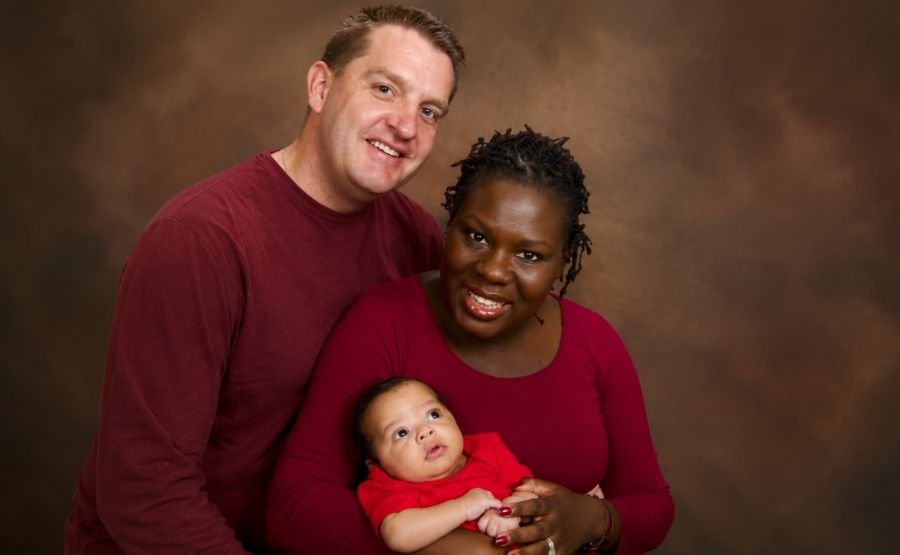
Linda Bazalaki: From Miss Uganda 1993 to Family Nurse Practitioner
Here is something nobody writing about Linda Bazalaki has been honest enough to say: most of what you will find about her online is completely made up.
Not exaggerated. Not selectively framed. Actually fabricated — by content farms, by AI scrapers, by SEO mills that have plastered her name across dozens of identical fake-biography pages, each one contradicting the last. One site says she was born in Athens, Greece in 1985. Another puts her birthplace as Kampala in 1965. Another says Gulu in 1975. One tells you her husband is Sulaiman Madada, the former mayor of Kampala. Another says her husband is Curtis Lahti, a Wisconsin State basketball player who proposed at an Arizona Diamondbacks game in 2008. A third calls her a medical doctor elected to parliament. A fourth calls her a celebrated Greek actress who won Best Actress at an international film festival for Echoes of the Past. I want you to sit with that for a second. The same real woman, the same name, and the internet has basically cloned her into six different people who share nothing except a name and the phrase “role model.”
Look, I’ve been following these tales and observing the Ugandan pageant scene for years because the post-crown arc of former beauty queens reveals everything about a society. values versus what it says it values. And Linda Bazalaki’s story — the real one, once you scrape past the slop — is genuinely interesting. Which makes it all the more aggravating that you basically can’t read about it anywhere without a content bot telling you she “embodies the belief that potential is limitless.”
Let’s start with what we actually know.
What Actually Matters
| Fact | Verified Status |
| Won Miss Uganda 1993 | Verified: Pulse Uganda archival list, Wikipedia’s Miss Uganda list |
| Student at Makerere University (MUK) when she won | Confirmed — femilonge.net sourcing older Ugandan media |
| Competed at Miss World 1993, placed unplaced | Confirmed — Wikipedia Miss Uganda World table |
| Worked as air hostess for Alliance Air (mid-1990s) | Stated in multiple sources tracing to older Ugandan reporting |
| Later lived and worked in Las Vegas, Nevada | Confirmed — multiple separate sources |
| Worked as a loan officer in Las Vegas | Confirmed in femilonge.net sourcing older reporting |
| Later pursued a career in healthcare/nursing | Multiple sources, consistent claim |
| Married Curtis Lahti, December 20, 2008 | Consistently reported, baseball proposal confirmed by separate sources |
| Birth year or exact birthdate | Unknown — deliberately never disclosed |
| Active social media presence | None traceable; Instagram described as “unknown” |
The 1993 Crown and What It Didn’t Come With
You have to understand what Uganda looked like in 1993 to understand what that crown actually meant. The country was barely a decade past the Obote II regime. Museveni had consolidated power. Things were cautiously stable in Kampala, disastrously violent in the north, and the beauty pageant was — as the Christian Science Monitor documented years later about the general Miss Uganda phenomenon — a kind of national pressure valve. Something close to the Oscars, a rare occasion for sequined gowns and television cameras in a country where the average daily income was under a dollar.
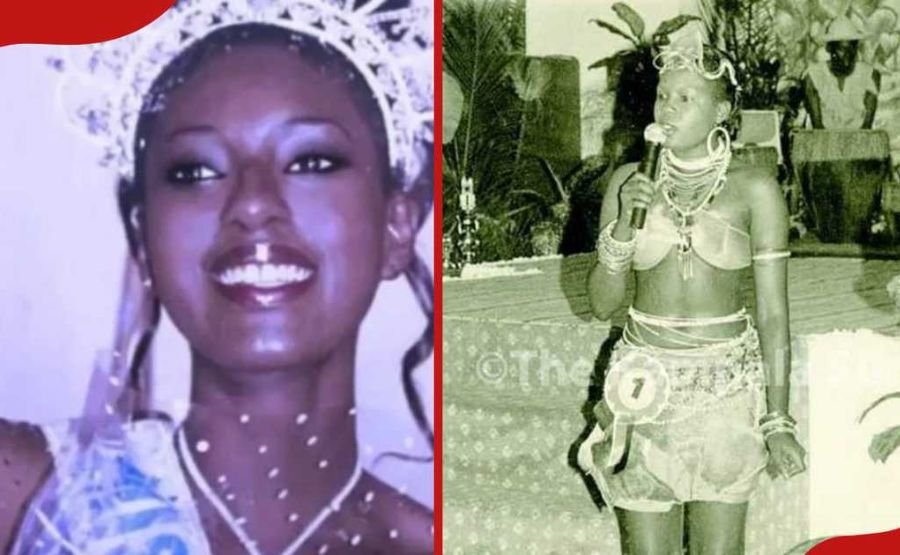
Linda Bazalaki won the title while she was a student at Makerere University. That matters. Makerere in the early nineties was still the intellectual heartbeat of East Africa, battered but standing. Winning the Miss Uganda crown as a Makerere student placed you in a specific intersection of aspiration: educated, visible, poised between two worlds. She went to Miss World. She placed unplaced — which, if you know Miss World, is the default outcome for nearly every African entrant. The pageant’s record in recognizing African women fairly is its own separate saga, and Uganda’s sole finalist placement since 1967 only underscores it. It should have been okay if Linda had gone, competed, and returned without a placement. It wasn’t really the placement that mattered at home.
But here’s the thing. What did she come back to? What did the Miss Uganda crown actually give her? One source mentions she received a free air ticket to South Africa and a wardrobe as her crowning incentives. That’s it. A plane ticket and some clothes. This is the reality of African beauty pageants at that time — the prizes looked impressive in the programme and evaporated upon delivery. Former Miss Uganda winners interviewed by the Monitor years later described the gap between promised prizes and actual support as consistent, almost institutional. One previous winner described pageant management as “crappy.” Another said projects got killed by politics or lack of funding every time.
I’m not saying Linda was mistreated. I’m saying the structural disappointment was the water she swam in, like every other winner before and after her.
See also “Anna Kate Denver: The Private Heiress of a Music Legend“
The Quiet Years Nobody Covers
This is the gap that bothers me most. Between 1993 and roughly 2008 — fifteen years — almost nothing is documented about Linda Bazalaki’s life in any source I trust. The AI-generated sites wave their hands vaguely about “healthcare leadership” and “philanthropy,” but those pages are generating plausible nouns around a famous name, not reporting facts.
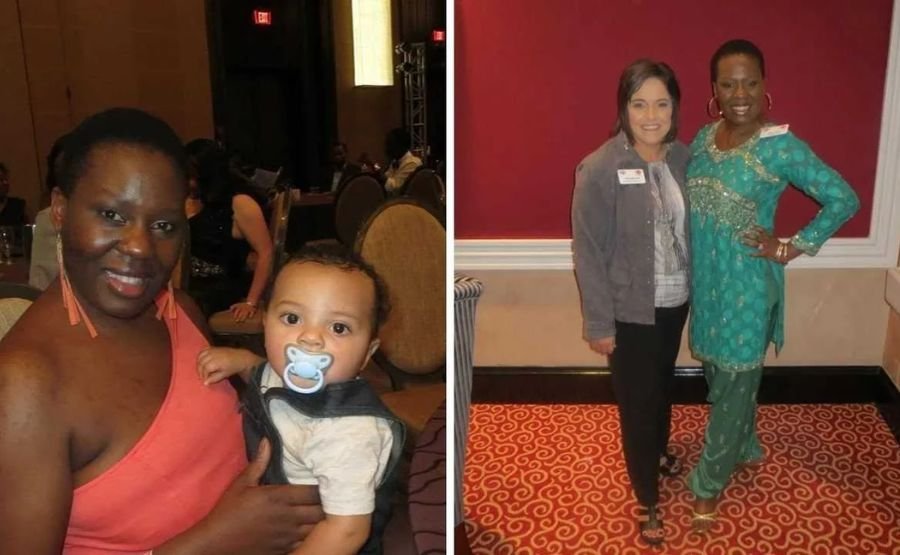
What we do know is specific and interesting. She worked as a flight attendant for Alliance Air in the mid-1990s. Alliance Air was a Ugandan carrier — “Captain Roy’s Alliance Air,” as the sources name it — which tells you she stayed in Uganda for at least part of that period after her reign. She later moved to the US at some point. She ended up in Las Vegas. She worked as a loan officer. She eventually transitioned into healthcare. By 2008, she was a health professional in Nevada.
Regarding the immigration aspect of this story, let’s be truthful. A former Miss Uganda, educated at Makerere, spends a few years as a flight attendant at a local airline, then emigrates and becomes a loan officer and nurse in Las Vegas. In the Ugandan diaspora, this is not an uncommon tale. It is, in fact, a very common one, and it reflects something uncomfortable about what Uganda offered talented women who had the visibility of a national platform but not necessarily the institutional support to build on it domestically. The diaspora community — especially in American cities with Ugandan populations — is full of people with advanced education and former prominence in Uganda who rebuilt entirely different lives in the United States. Some made it home. Most didn’t.
There’s no bitterness implied in that. But there is a truth in it that the “role model for Ugandan youth” framing consistently refuses to touch.
The Proposal Story and the Husband Confusion
Okay, here’s where I need to take a small detour, because the online confusion about her husband is genuinely revealing about how misinformation spreads.
Multiple sources — clearly AI-generated, clearly hallucinated — claim Linda Bazalaki is married to Sulaiman Madada, described as the “former mayor of Kampala,” and that she is a Ugandan MP, a construction company owner, and a member of parliament. This is almost certainly a different Linda Bazalaki entirely. Uganda is a large country. There are multiple public figures named Linda Bazalaki, and at least one is indeed a Ugandan politician and women’s rights advocate who has served in the Ugandan parliament. The content farms have merged these two women into a single biography and served it as fact to thousands of search queries.
The Miss Uganda 1993 Linda Bazalaki — the one this essay is about — married Curtis Lahti, a former basketball and baseball player from Wisconsin State University. He proposed at an Arizona Diamondbacks game against the Washington Nationals in May 2008. She said yes. They were married on December 20, 2008, in Las Vegas. Curtis Lahti, we’re told, was named MVP of the Year and inducted into the Wisconsin State University Athletic Hall of Fame. That’s a detail specific enough to be credible. And it’s a striking detail — the former Miss Uganda, now a healthcare professional in Nevada, getting proposed to at a baseball game in Arizona. That line contains a full existence that no one has ever written about.
I’m not going to pretend that’s not worth finding odd. Not judgmental — just honest. It’s a very American story. The kind that happens when someone builds a second life completely.
The True Story Here Is the AI-Biography Issue
Look, I want to step back from the specifics for a minute because there’s a meta-level to what’s happened to Linda Bazalaki’s public record that deserves its own attention.
When you search her name today, you get dozens of pages. They have headlines, bio tables, section headings, FAQ sections. They feel authoritative. They’re garbage. They were written by language models scraping Wikipedia lists of Miss Uganda winners and then generating plausible-sounding paragraphs about fictional careers, fictional birthplaces, fictional husbands, fictional awards. One site claims she won Best Actress at an international film festival. Another places her birth in Athens. Another assigns her the role of an academic women’s rights researcher with a Wikipedia page about her work. None of this happened.
What this means in practice is that Linda Bazalaki — a real woman who won a real title, lived a real life across continents, married a real person, built a real career — has been surrounded and obscured by a cloud of synthetic biography so thick that a genuine researcher struggles to find her actual story. The real information that exists — the Makerere attendance, the Alliance Air job, the Las Vegas loan officer period, the healthcare career, the marriage — is scattered in one or two older Ugandan entertainment sites that cared to track down some actual reporting.
This is what happens to women whose public moment came before the internet, whose subsequent lives were quiet by choice, and whose names became searchable enough to be farmed. It’s not unique to her.However, it is, in my opinion, the most important aspect of her current public legacy. She exists more as an AI hallucination than as a documented person.
That’s genuinely depressing. And it says nothing about her. It says everything about what we’ve done to information.
What the Coverage Avoids
Every article, genuine or fabricated, hits the same notes: grace, empowerment, role model, resilience, legacy. Every article avoids the questions that would make the story real.
What was it actually like to be Miss Uganda at a time when the country was slowly emerging from political violence, and the pageant’s prize was a wardrobe and a plane ticket? What did she think of the contest’s relationship to agricultural ministry oversight — yes, that’s real, the Miss Uganda Foundation was formally linked to agricultural promotion initiatives — which is about as incongruous a pairing as you can imagine? What did she make of her own identity shift across continents? What was the loan officer chapter? What was it like to become a healthcare worker in Las Vegas — a city whose economy runs on spectacle and whose healthcare system is its own kind of pageant — as a woman who once represented her country in a British beauty contest?
Nobody asked. Nobody published it if they did. And now the internet has helpfully filled the silence with fiction.
My Personal Verdict
Here’s what I actually think, for whatever it’s worth.
Linda Bazalaki made genuinely sensible choices. She went to university, she competed in a pageant that offered her visibility, she worked when the institutional support didn’t materialize, she emigrated when that became the path forward, she built a healthcare career, she married someone who apparently loved her enough to plan a sports-venue proposal. None of that is a failure. A lot of it is more impressive than the crown.
The thing that makes me slightly bitter — not at her, at the whole machinery — is that she’s more famous now in a sort of ambient way, thanks to SEO scraping, than she probably ever wanted to be. And none of the fame is accurate. There’s a real life somewhere behind all those keyword-stuffed pages that would be worth reading. Somebody should write it. An actual journalist, with a phone, calling someone who knows her.
The alternative is what we have now: a former queen, a nurse, a Las Vegas resident, and an airport waiting to be haunted by six different fictional versions of herself.
FAQs
1. Who is Linda Bazalaki?
She’s the real Miss Uganda 1993, a Makerere University student when she won, who later became a healthcare professional in Las Vegas after working as a flight attendant in Uganda and a loan officer in Nevada.
2. Did Linda Bazalaki win Miss World?
No. She competed at Miss World 1993 and placed unplaced — the default for nearly every African entrant at that time. Uganda’s only Miss World finalist since 1967 came decades later.
3. Is Linda Bazalaki a Ugandan MP?
No — that’s a different Linda Bazalaki, a politician from Gomba District. The internet has badly conflated these two women, and it’s an ongoing mess.
4. Who is Linda Bazalaki married to?
Curtis Lahti, a former Wisconsin State University athlete. He proposed at an Arizona Diamondbacks baseball game in May 2008. That December, they tied the knot in Las Vegas..
5. Where does Linda Bazalaki live now?
Las Vegas, Nevada, as of the last verifiable information.
6. What does Linda Bazalaki do now?
She works in healthcare.She explored careers in nursing and the health sector, according to a number of different sources. She previously worked as a loan officer in Las Vegas.
7. Why is her birthday unknown?
Genuinely unclear. She’s never publicly disclosed it, and Ugandan entertainment media from her pageant era didn’t consistently record it. Every “birthday” you see online is either fabricated or a guess.
8. Why do so many sites say she was born in Greece?
Because an AI hallucinated it. One rogue page produced a “Linda Bazalaki Curtis, born March 15, 1985, Athens, Greece” and the information propagated. It is completely false.
9. Was she the first Miss Uganda to go international?
Yes, no. Since 1967, the Miss Uganda pageant has sent its winners to Miss World. One site claimed she was the first Ugandan to compete in an international beauty pageant — also false.
10. What did she actually get for winning Miss Uganda?
A free plane ticket to South Africa and a wardrobe. That’s what the available sourcing says. This was apparently standard for the era, and the gap between pageant promises and actual prizes was a consistent feature of Ugandan beauty competitions at the time.
11. Why is there so little real information about her?
She lives a private life and appears to have chosen not to perform a public persona after her reign. The internet filled the silence with synthetic biography. Both of these are true at the same time and support one another.
Find fresh stories beyond the spotlight with Celebs Flare.
One Comment